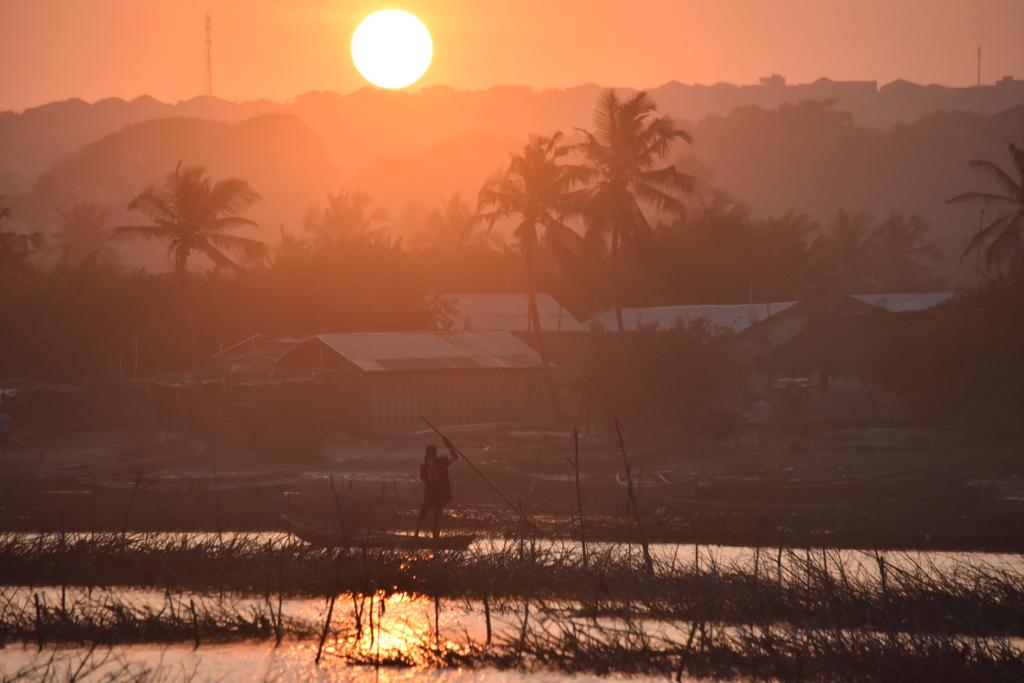
This past month, I’ve been in Ghana studying health systems, services, and education. Last summer I attended this program as a student, so I was thrilled to have the opportunity to return as a TA and revisit many of the same sites I enjoyed so much last year. Throughout the month, our group travels to four different cities visiting hospitals, clinics, and schools to learn about health care structure and delivery in Ghana. Given the fact that there are SO many activities are packed into our program, my Ghana blog recounts a few of the highlights or experiences that stuck out to me.

Our month started in Accra, the capital and largest city of Ghana. On our first day, we visited the U.S. Embassy which was such an informative experience. We spoke with the U.S. Health Service Officer for Ghana as well as a few other public health and USAID department heads. I thoroughly enjoyed learning about the role and involvement of the U.S. Foreign Service Officers since this is a career I am interested in pursuing. I find it really interesting to learn about US government aid and involvement in low to middle income countries, particularly areas with histories with Western involvement or colonization. The officer spoke to us about the USAID efforts to alleviate the burden of infectious disease in Ghana, particularly in rural communities suffering from high rates of malaria and HIV/AIDS. This experience was so valuable and great to hear about these efforts first-hand.
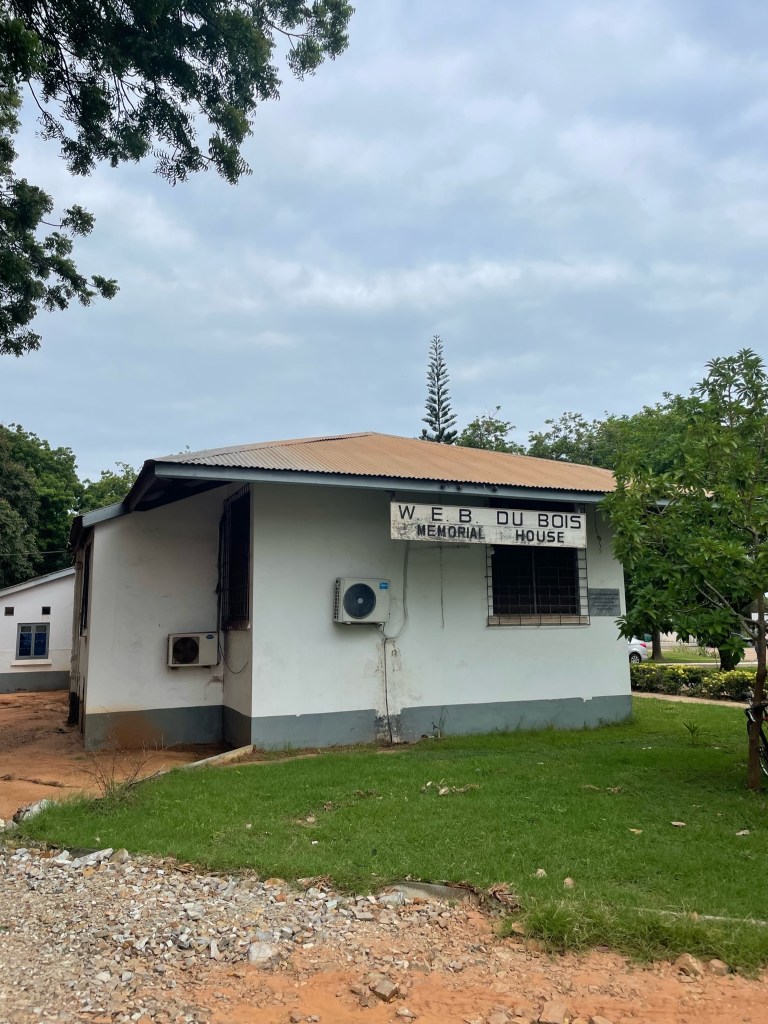
Another main attraction in Accra is W.E.B. du Bois’ house, which has now been converted into a museum. W.E.B. du Bois was a Pan-Africanist and founder of the NAACP who widely advocated for Black American rights and fought in the US Civil Rights Movement. At the age of 91 he moved to Ghana, where he continued to work with African leaders. His home is filled with amazing memorabilia and literature from his lifetime.
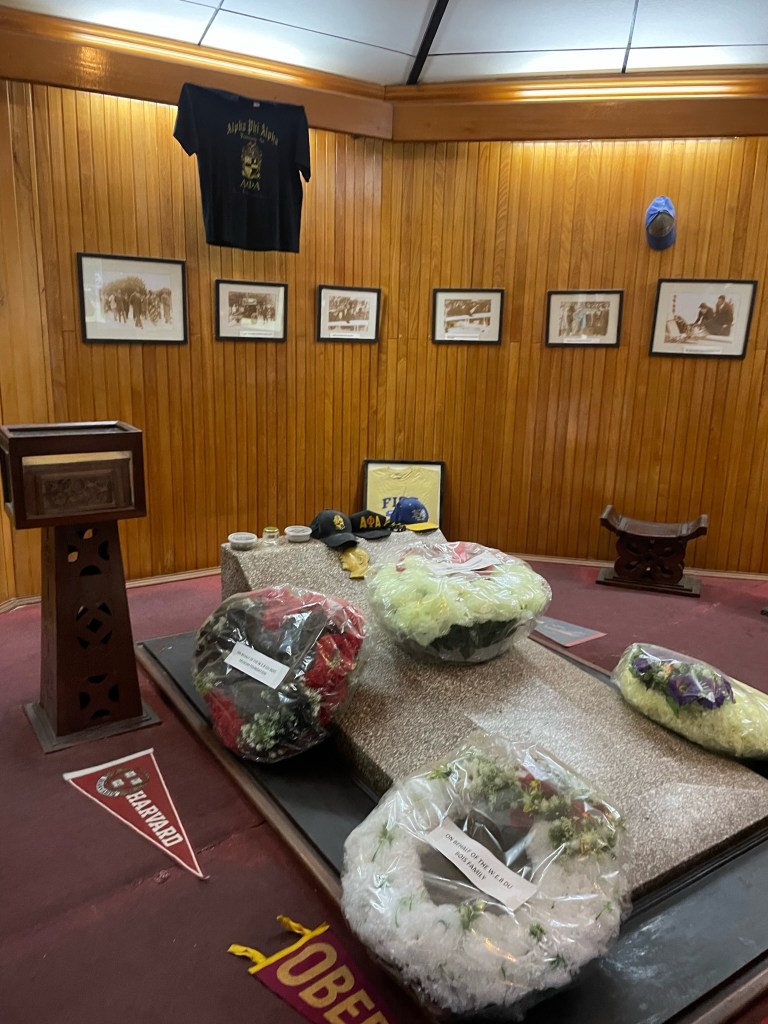
His gravesite his held in a building shaped like a spider’s web (also a word play on his name, W.E.B). This web is symbolic for the web of impact W.E.B du Bois built around the world and is a lesson for us to follow his ways of spreading unity and justice in our own communities. One of my favorite quotes by him is, “Mobilize science and the arts to render shattering blows to the myth of white superiority in every area of our cultural life”.
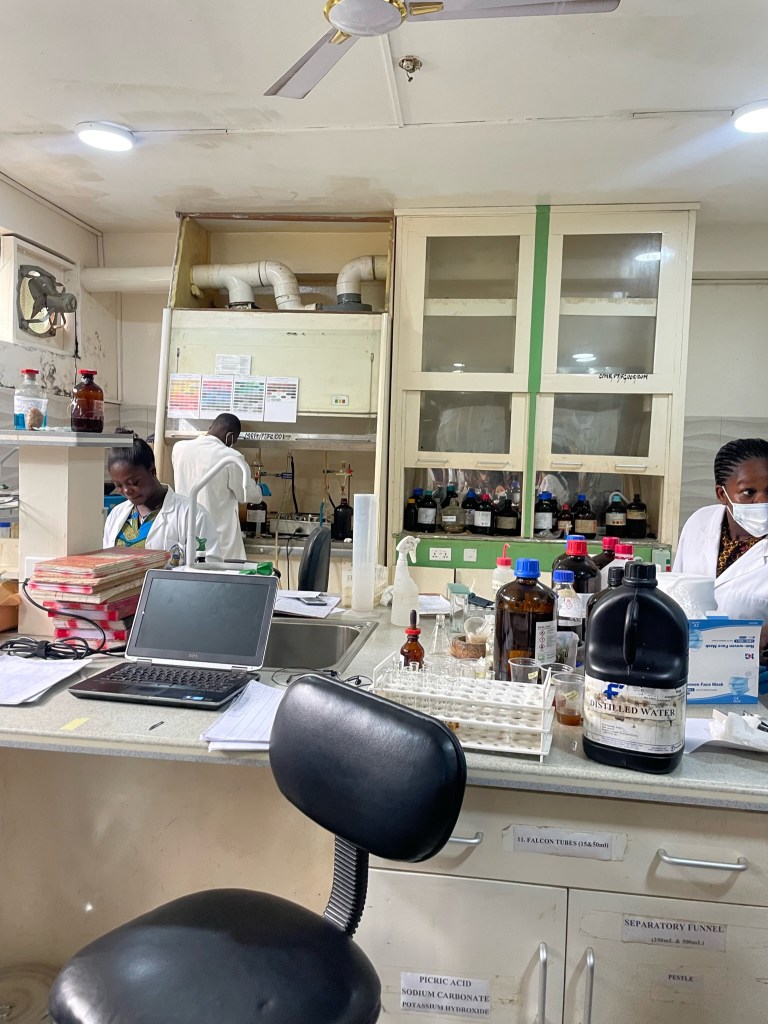
On one of the mornings, our group traveled to visit the Akropong Centre for Plant Medicine Research. In Ghana, 70% of people still use traditional healing remedies including herbalism and plant medicine. At this research center and clinic, they perform toxicology and pharmacology testing of plants and develop safe, plant-based products like teas, creams, pills, and vitamins.
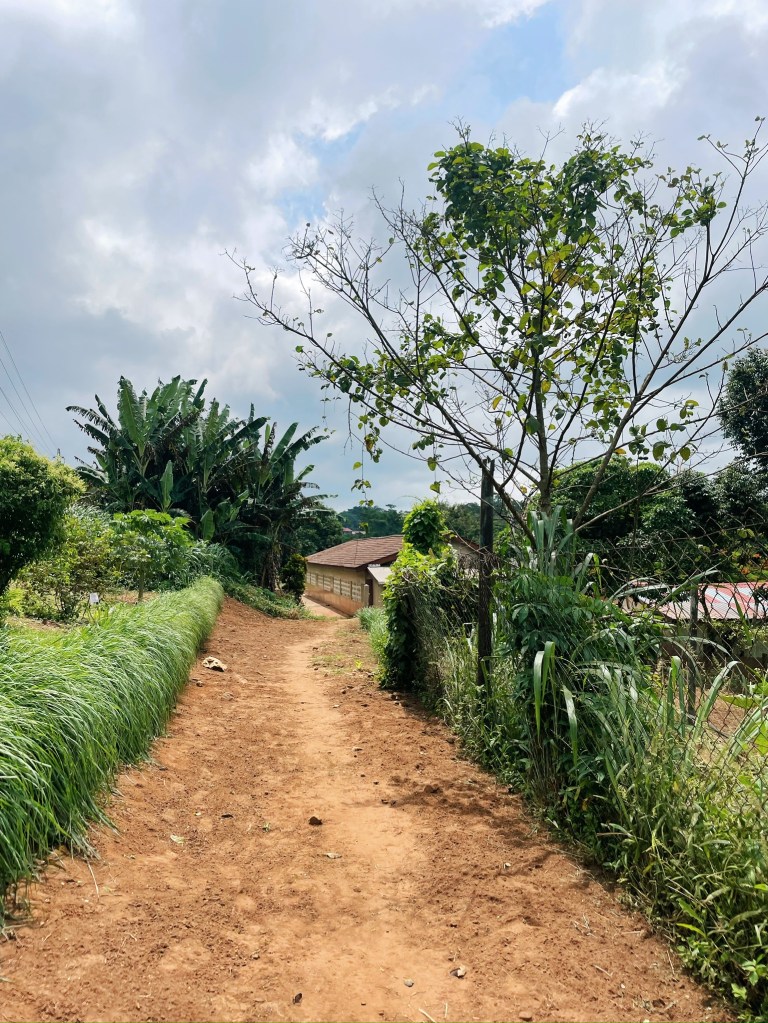
This site visit is so interesting to me because of their efforts to blend traditional and modern medicine. In rural Ghanaian communities, many people do not engage with modern or scientific medicine and use traditional healing methods based on thousands of years of cultural, spiritual, and religious roots. By the time they end up seeking professional care, many of their medical conditions have become fatal and are very difficult to treat. This is why it is crucial for to embrace medical pluralism, which allows traditional communities to still utilize medical practices that are culturally and spiritually significant, but incorporates elements of scientific, researched medicine that are safe and effective. For me, it’s a reminder to not dismiss traditional medicine, but instead incorporate it into the medical knowledge we have today.
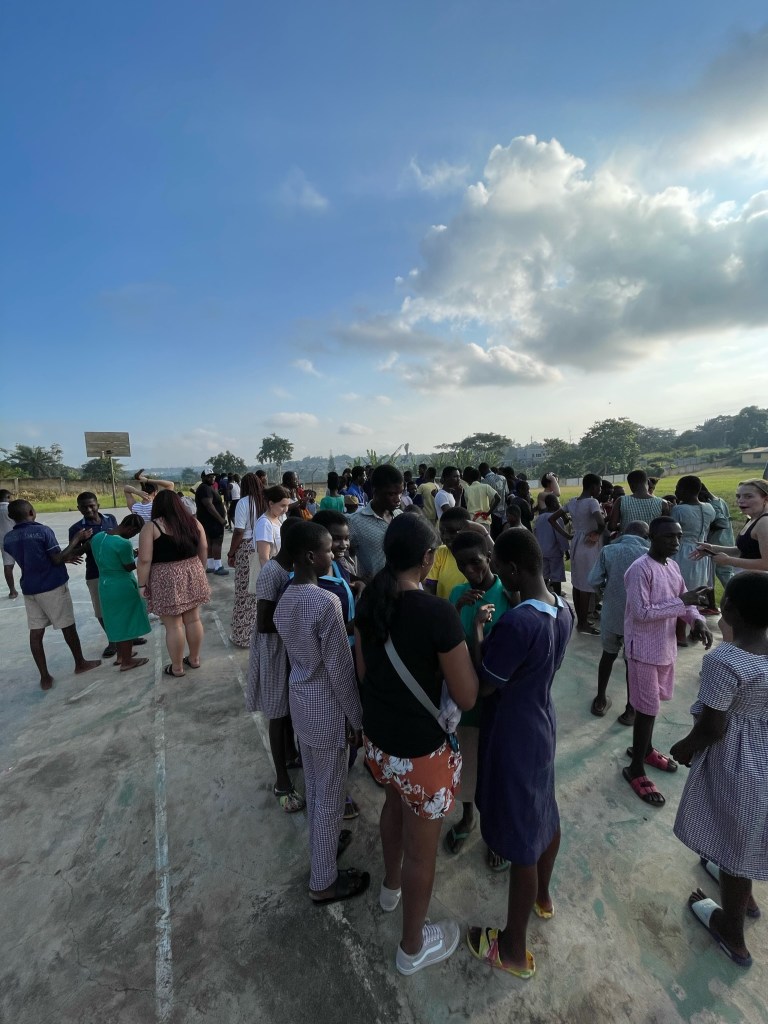
One of my favorite visits during the program is our trip to the Demonstration School for the Deaf. As an American Sign Language minor, it was such a mutually beneficial experience to interact with the Deaf students. We were able to have full conversations with one another because much of Ghanaian Sign Language is based off of ASL. About 0.4% of Ghana’s population is deaf and there are many forms of indigenous sign language used around the country. However, there is no formalized sign language policy in Ghana, which makes it extremely difficult for Deaf schools to receive funding or services for Deaf students. For many of our students, this was their first time engaging with a fully Deaf community. This trip is an amazing way to learn about Deaf stigma while also learning some sign language in Ghana! It’s also a great reminder that there are so many ways to overcome language barriers through games, dancing, and playing sports.
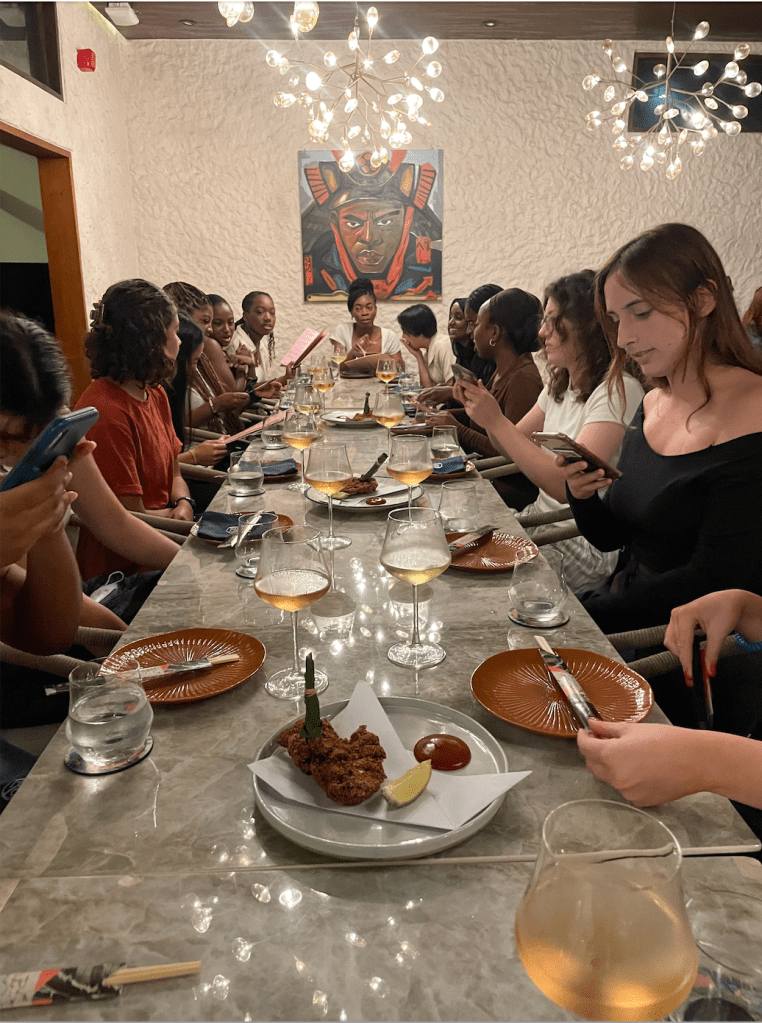
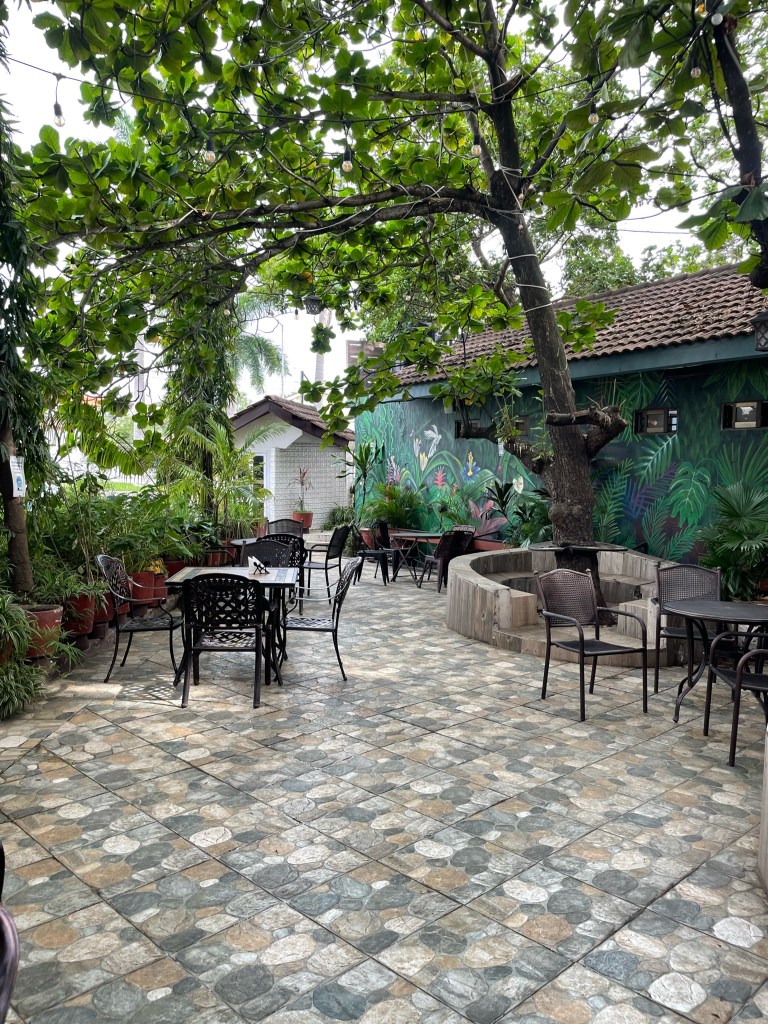
For one of our group dinners, we had the opportunity to go to Kozo, a restaurant serving Afro-Asian fusion cuisine. Funny enough, the restaurant was started by a Northeastern University alumni, who was kind enough to host our group! The food was unbelievably delicious and such a unique spin on traditional African and traditional Asian food. The restaurant had such a cool atmosphere as well and it was one of the best dinners we had in Ghana!
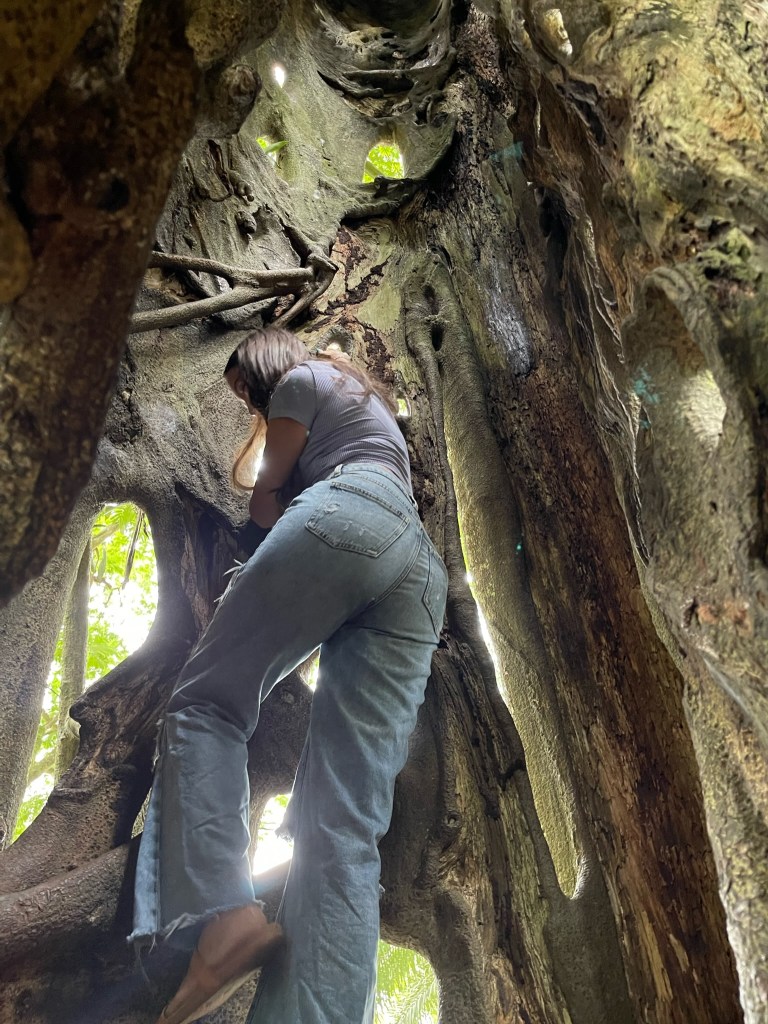
The Aburi Botanical Gardens are a popular attraction in Accra, located on a mountain in the north. This area is over 160 acres wide and is a garden with a variety of unique plants, trees, and species native to Ghana. One of the most unique phenomena are the trees that have been overcome by parasitic plants that have completely eaten away at the actual tree, leaving them hollow. You can even climb inside these hollow trees; they are so large! The gardens are filled with school groups and family picnics, making it such a beautiful, peaceful communal space for visitors.


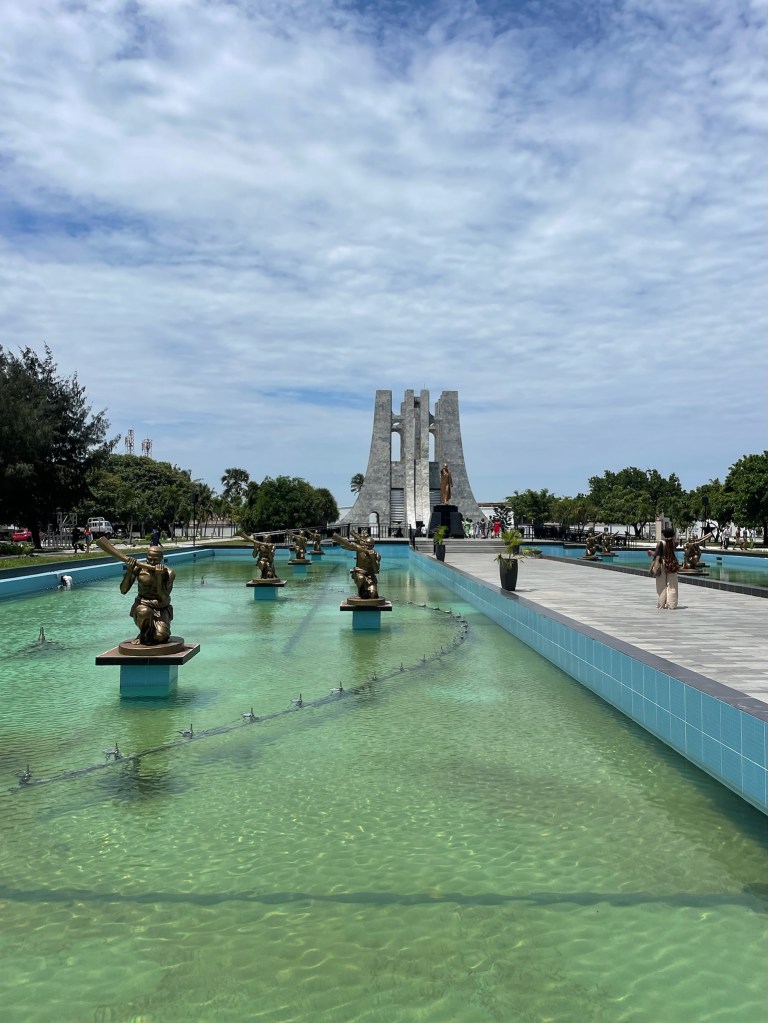
This year, our group was finally able to visit the Kwame Nkrumah Memorial Park, which is a museum and mausoleum for Dr. Kwame Nkrumah, the first president of Ghana. Kwame Nkrumah led the Gold Coast to independence from Britain in 1957 and was a remarkable fighter for Pan-Africanism and decolonization. He was instrumental in African international relations and led Ghana to play a leading role in other African countries receiving their independence from European powers. He believed that “the independence of Ghana is meaningless unless it is linked up with the total liberation of Africa”.
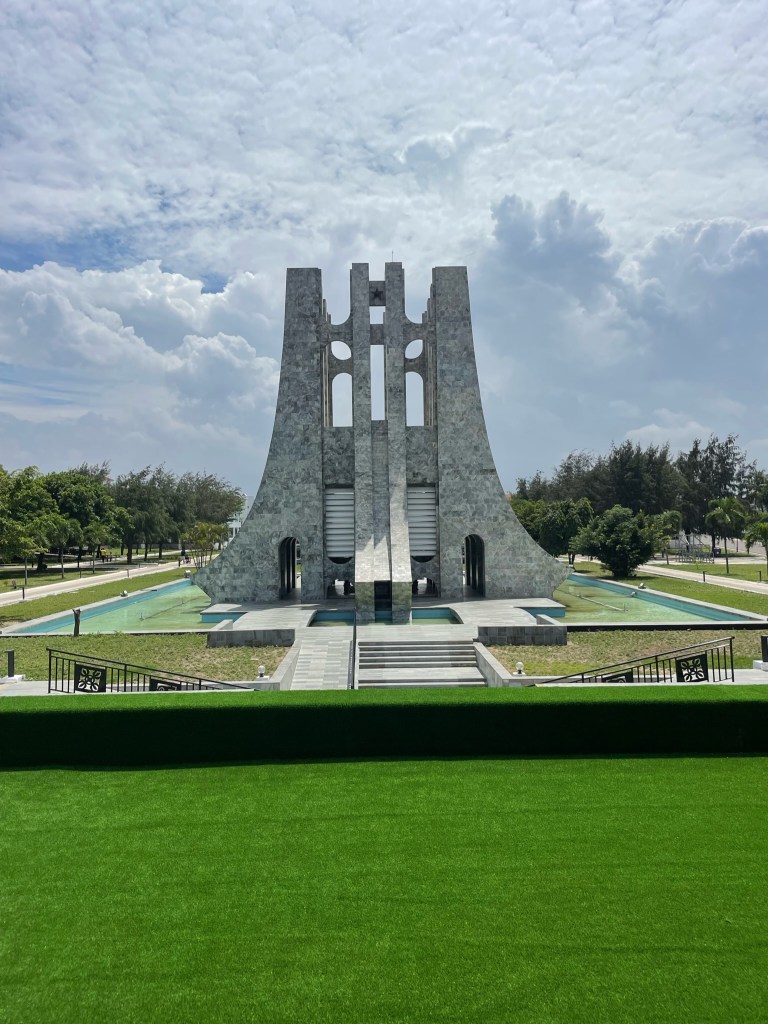
His mausoleum was built as an upside-down Akan symbol of peace and is surrounded by water, the symbol of life. It also looks like an upside-down tree, symbolizing the unfinished works of Kwame Nkrumah. The museum was extremely informational and taught us so much about Kwame Nkrumah’s life and his contributions to Ghana in political, economic, social, cultural, and historical spheres. One of my favorite quotes from Kwame Nkrumah is: “Those who would judge us merely by the heights we have achieved would do well to remember the depths from which we started”. This quote still feels so relevant to this day. Many people still have preconceived judgments about African countries in comparison to Western regions of the world. However, so many of the issues in these regions are a direct result from European colonization which have underdeveloped African society in many different contexts. This history is complicated, but visits to sites like this are a great reminder of how Ghana and Africa’s progress in uniting to overcome those challenges. I really admire Nkrumah’s fight for independence, rights, and justice in Ghana and his efforts to unite Africa during the decolonization period.
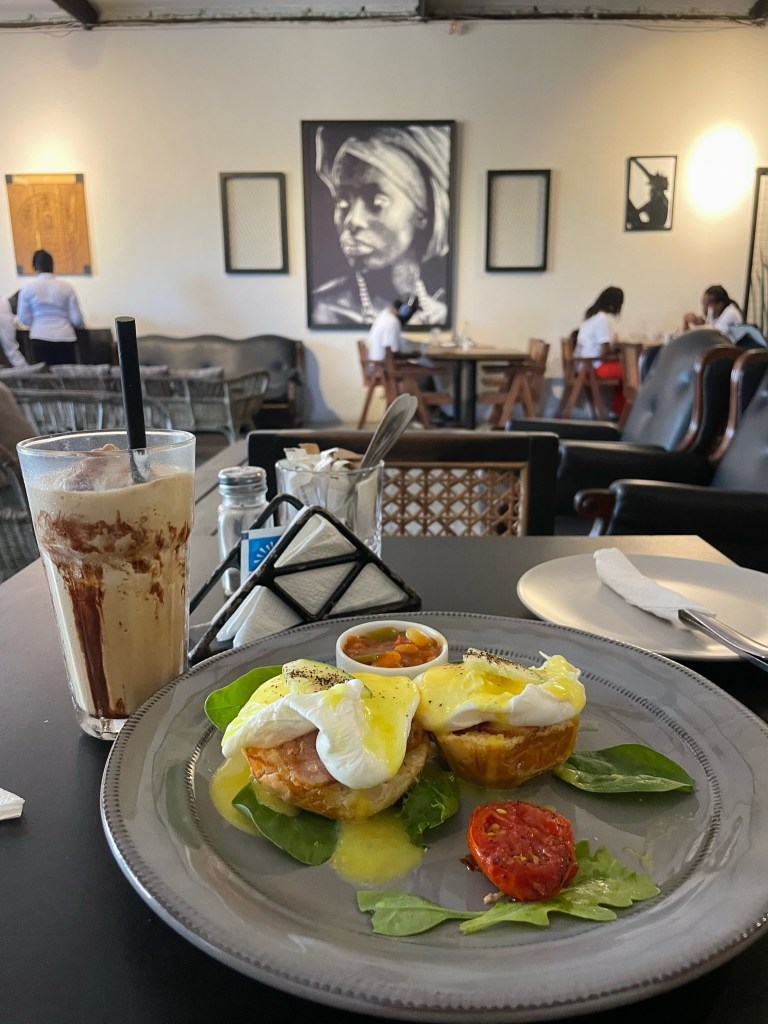
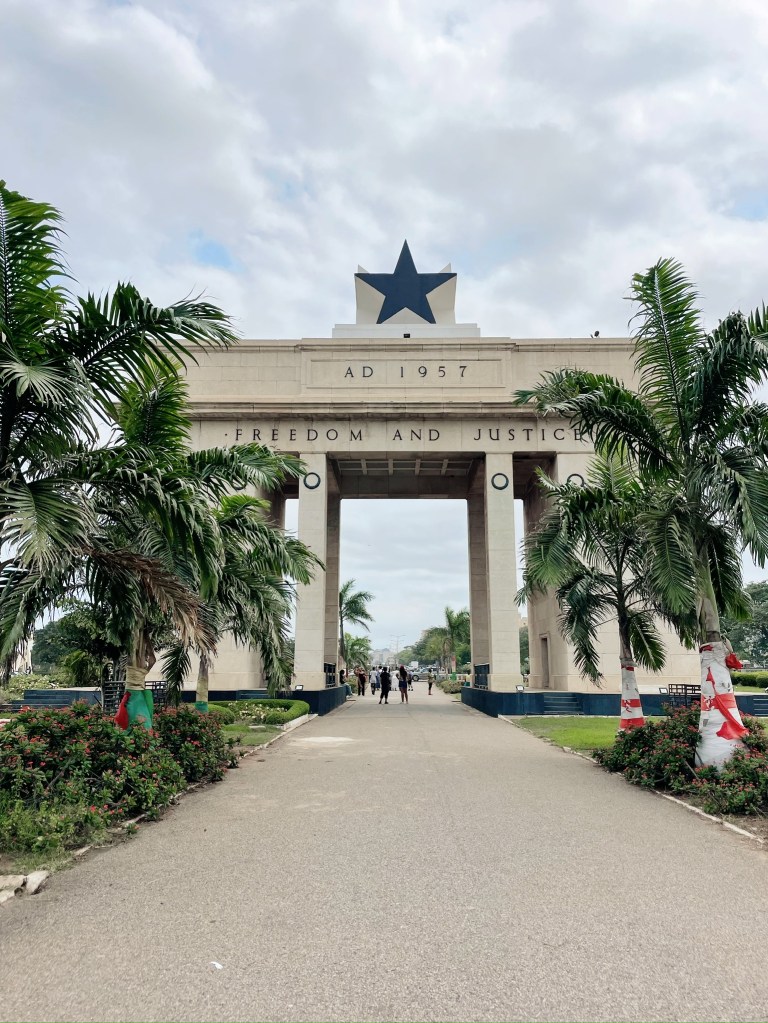
This year as a TA, I had a few days off, where I was able to go off on my own and explore the city! This was such a nice break from the trip and a nice opportunity to explore new areas. On my off-day, I had breakfast and coffee at Jamestown Coffee Roasters, a super cute café. I had the most delicious eggs benedict which I had been craving for so long! I then walked to the beach and sat for a while, enjoying the peacefulness by the water. After, I visited the Black Star Gate located in the Independence Square of Accra. This landmark was commissioned by Kwame Nkrumah and is symbolic of Ghana’s power to control their own affairs. It has the inscription, “AD 1957” (the independence year) and “Freedom and Justice”. The Black Star is a popular symbol in Ghana for Pan-Africanism and anti-colonialism. I’ve only ever driven past the gate, so I was really excited to finally be there up-close and visit such a significant site of Ghana. For the rest of the day, I hopped around a few cafes to just sit and read. This was such a wonderful day of the trip, and I loved getting to explore Accra on my own for a bit.
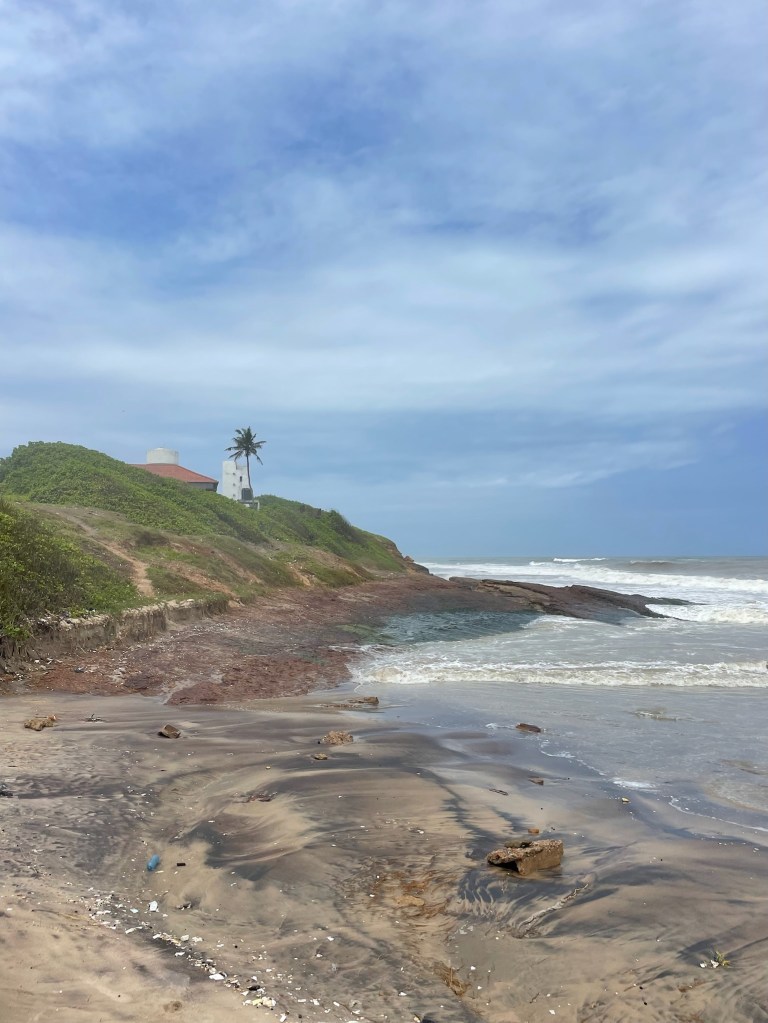
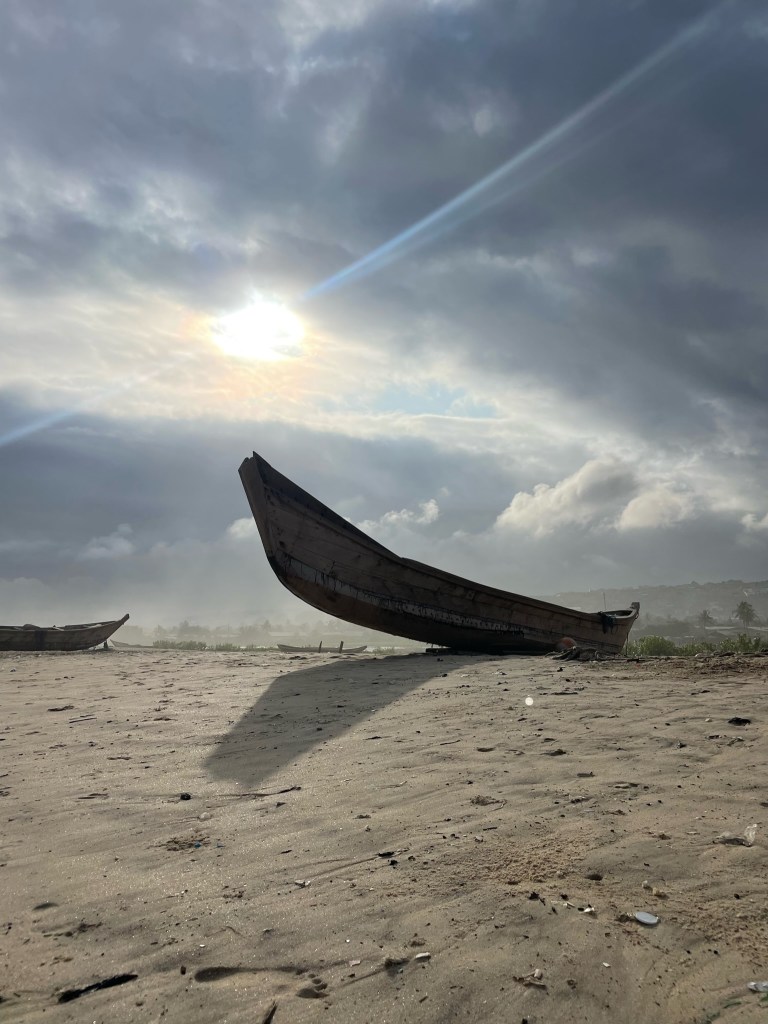
Another favorite day of the trip is our afternoon at Bojo Beach! From land, we take a small boat over to the actual beach. It’s so nice to spend time on the sand and by the water relaxing after the business of our program. The beach is lined with massive ships and its common to see horses running around. This year, it was a pretty cloudy day on our visit, but in past years, the sunset is absolutely beautiful over the water.
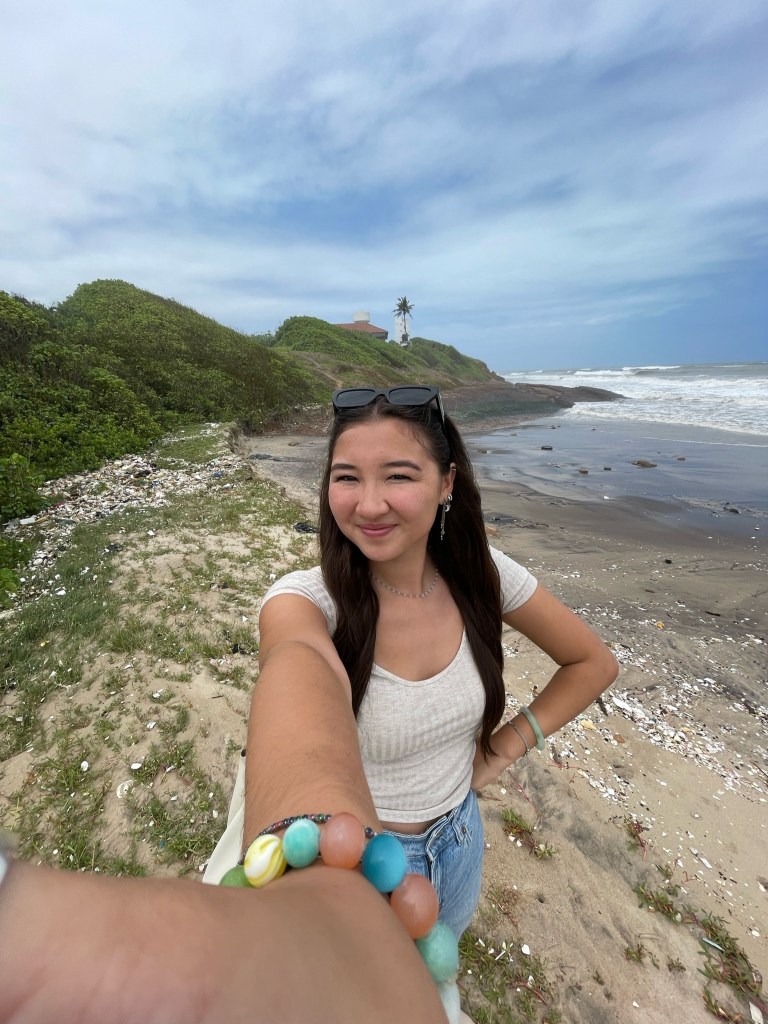
I am so grateful for the opportunity to have returned to Accra and return to so many familiar sites. Despite the familiarity, I was able to have so many new takeaways and return with new perspectives and knowledge. Ghana continues to fascinate me with its history and culture and never fails to reveal new insights and beauty to African life. Stay tuned for the rest of my trip in Kumasi, Cape Coast, and Winneba!
 Rachel's Blog