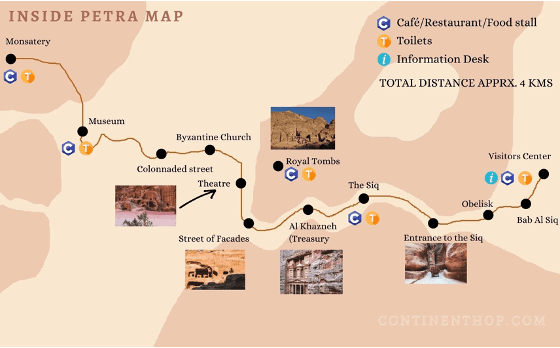
Our Jordan travels from Amman and the Dead Sea continued as we arrived in Petra! Petra is a historic and archaeological city and one of Jordan’s most popular tourist attractions. In the 4th century, the Nabateans (an ancient Arab people group) flourished in Petra, massively developing the city. They established Petra as a major regional trading hub, became accustomed to living in desert and canyon caves, and were known for their advanced skills in harvesting rainwater, agriculture, and stone carving. Throughout the years, Petra fell into control of the Romans, was largely destroyed by an earthquake in 363, and was eventually abandoned. The city was “rediscovered” in 1812 and designated as a UNESCO World Heritage Site in 1985. In 2007, Petra was also named one of the 7 Wonders of the World
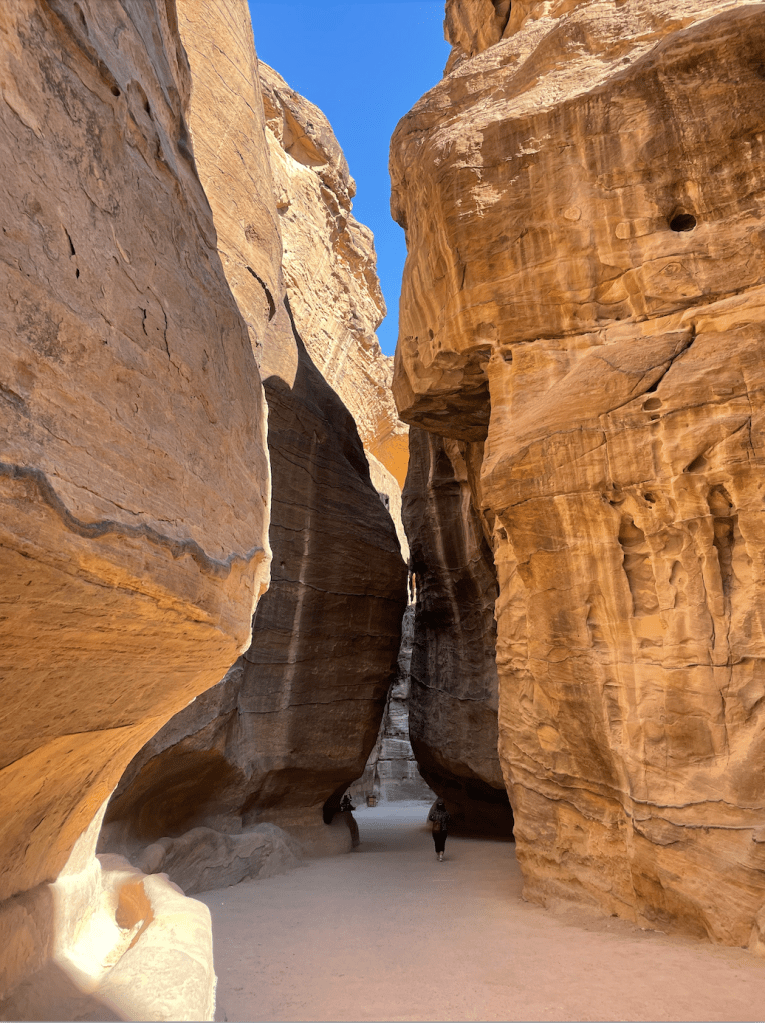
We stayed at a hotel right next to the main entrance of historical Petra, making it super easy to get around. We woke up early on our first morning to meet our tour guide and enter the city and beat some of the crowds. We started our trek walking through dirt roads and narrow passageways sandwiched between ginormous canyons. While the walk was long, it was amazing to stroll through such incredible rock structures. At some points, the gorge was no more than about 3 meters wide! I found it particularly fascinating that almost everywhere you looked were ruins of niches, carvings, tombs, statues, or aqueducts. It was super helpful to have a guide point out all of the unique sights since you certainly would miss them if you weren’t looking carefully.
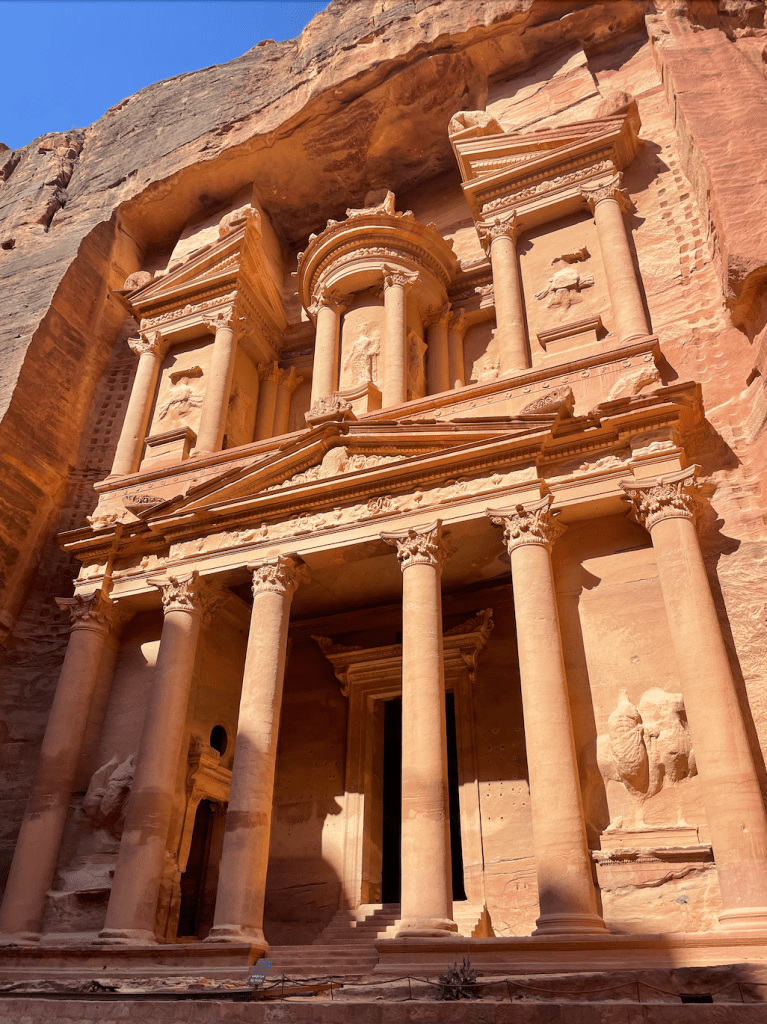
Finally, we reached the Siq, or the main entrance to the ancient Nabatean city. The narrow opening brought us to the most famous site: Al-Khazneh or The Treasury. The Treasury was built in the 1st century, carved out of sandstone rock face as a mausoleum for the ruling Nabatean King. Seeing the incredible detail, carvings, and sheer magnitude of the Treasury in person was unbelievable! It was amazing to see such an architectural feat that has been preserved for thousands of years right in front of us.
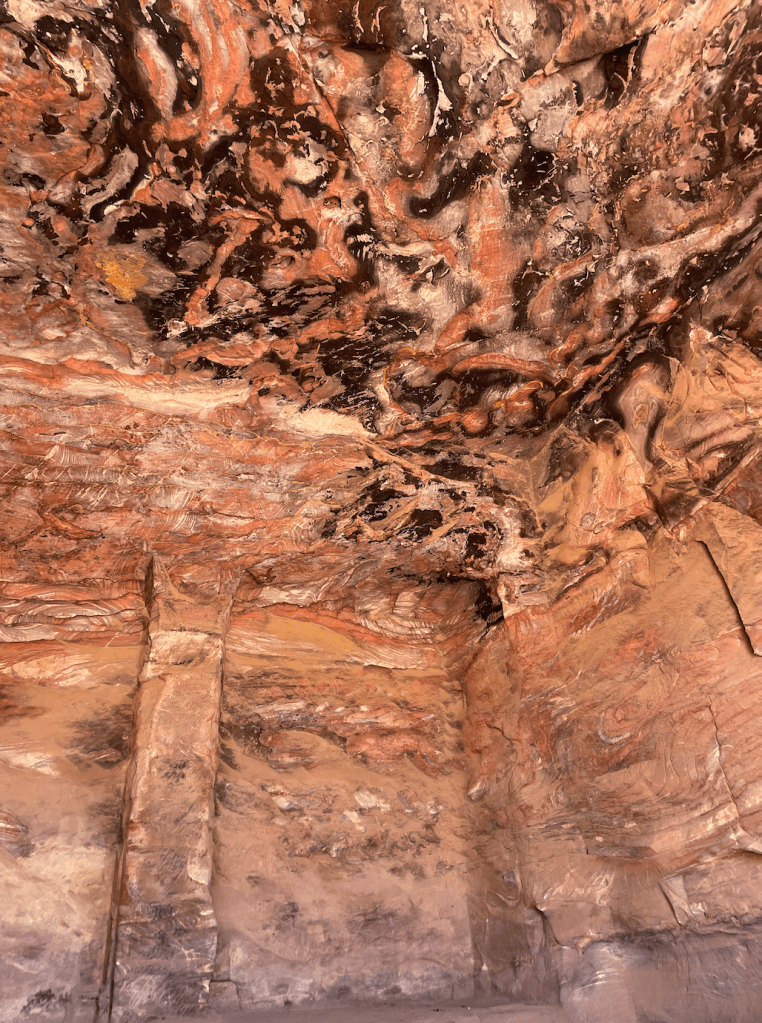
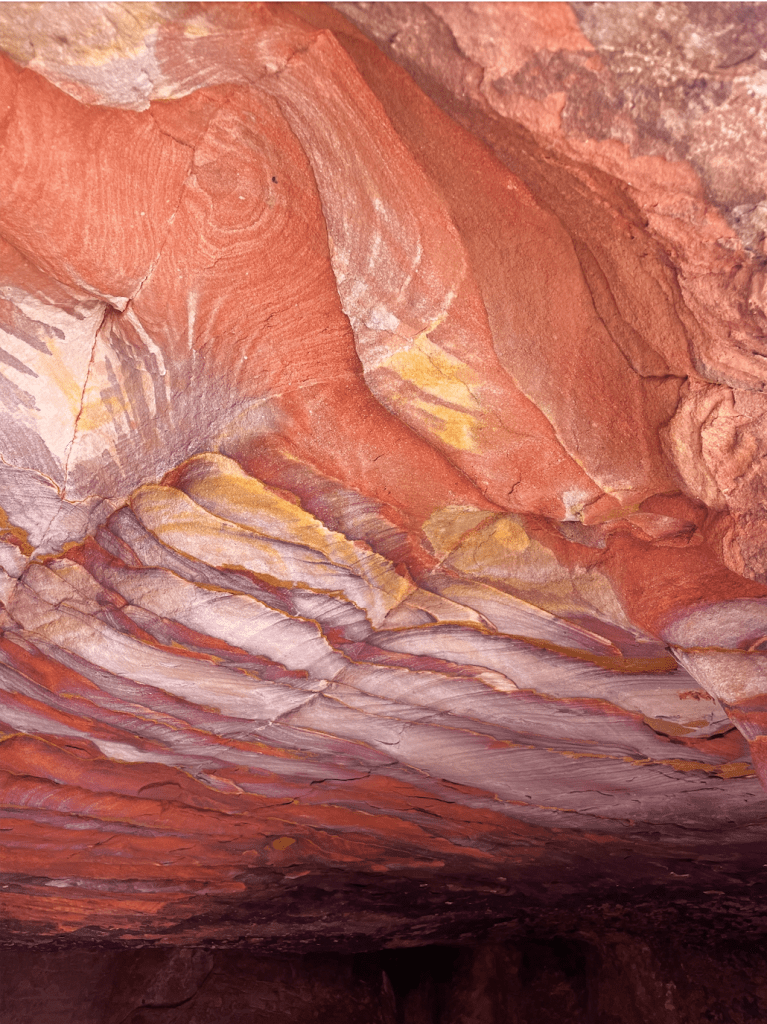
The area surrounding the Treasury was pretty chaotic with tourists, camels, and locals trying to entice you with rides and photos, so we moved on from the Treasury to explore the rest of Petra. Our guide took us down the main road, pointing out more unique caves and tombs, even taking us inside of a few. I was so surprised by the beautiful rock formations inside of the caves. Across the walls and ceilings, it looked as if the rock formations were flowing with bands of red, pink, yellow, and purple. It turns out that the Petra sandstone contains a mixed composition of quartz, feldspar, sulphur, iron oxide, and manganese, which causes the colorful variations. And the flowing designs were created by the flow of river water systems that deposited the sand minerals almost 500 million years ago. Crazy!

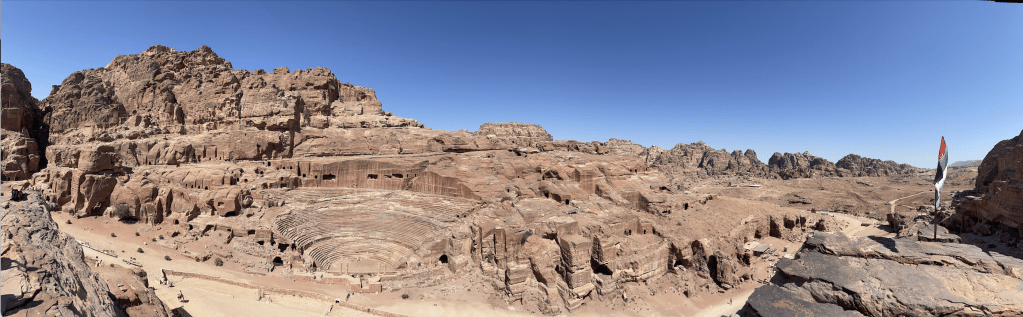
We continued walking through an area known as the Street of Facades, which led to the Theatre Necropolis. The theatre looked similar to the one we visited in Amman and holds around 8,500 people. Poetry readings, plays, and supposedly gladiator fights were held here. We took a slight detour to get a higher viewpoint of the street and theatre which involved a lot of climbing. The view was amazing and showcased the incredible craftsmanship of the Nabatean and Bedouin people.
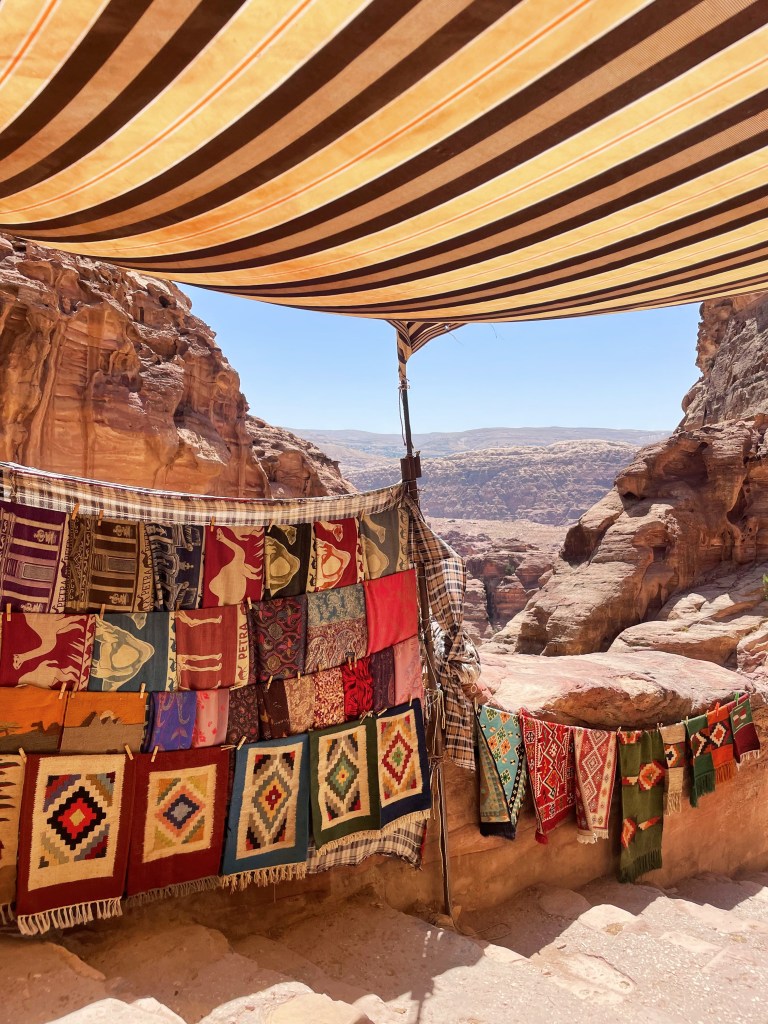
From this point, we said bye to our tour guide and continued exploring on our own. Our next trek was to Ad Deir or The Monastery. The walk up to the Monastery was more like a hike of 800 steps. I slightly underestimated how exhausting this walk up would be, as we were in the hot sun and the “stairs” were more like huge rocks to climb. Despite the workout, the view as we walked up to the Monastery was beautiful and there were lots of little shops on the way to look at.
Finally, we reached the Monastery which was 100% worth the hike! Located in the high hills and similar to the Treasury, the Monastery was cut out of a rock façade and used for various religious purposes. Personally, I liked this site the best because there wasn’t a ton of people around and the view was just as spectacular as the Treasury. I’m so glad we had pushed through the heat and exhaustion to make it up to this site.
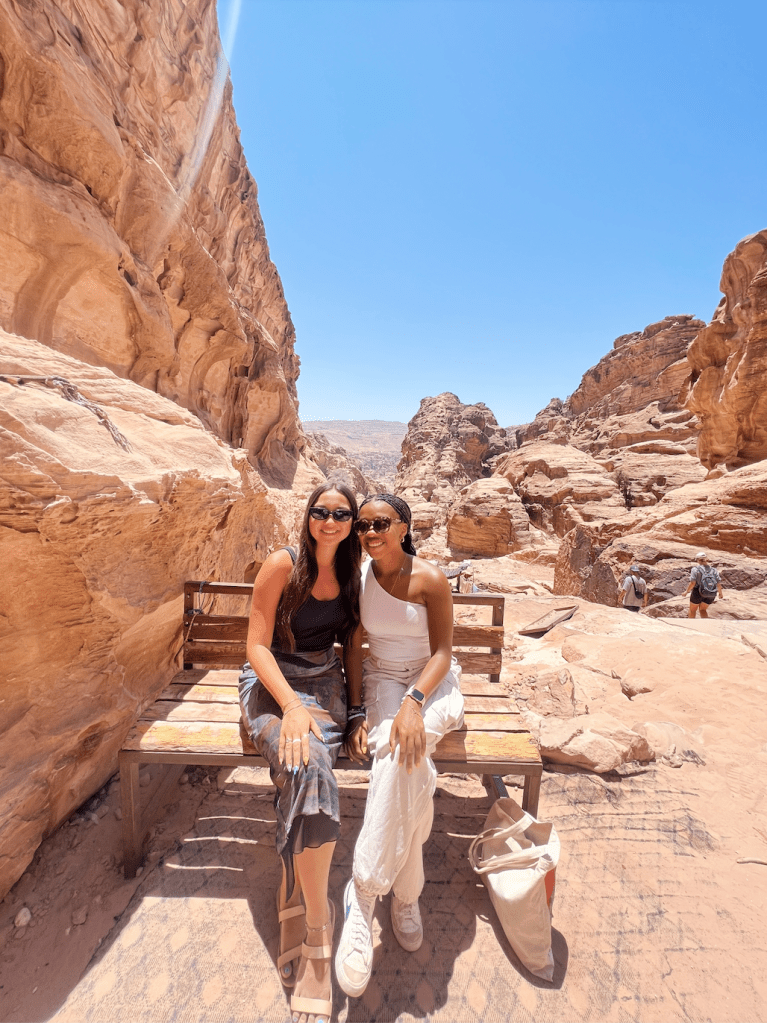

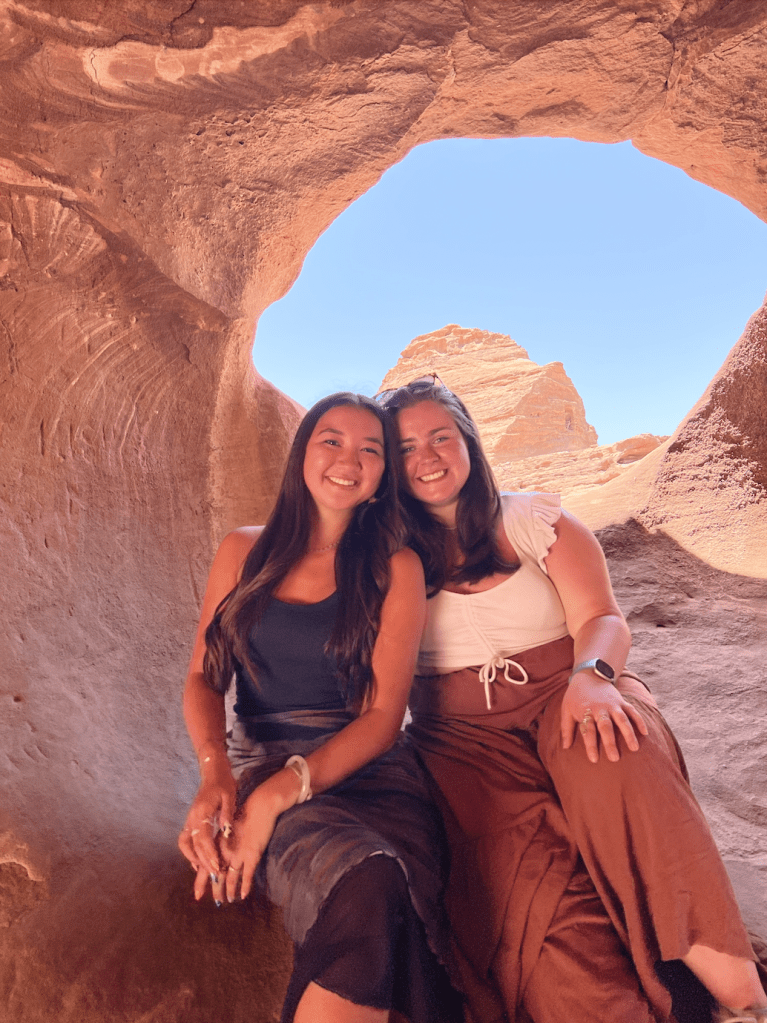
After the long walk all the way back down to the base of Petra, we stopped for lunch and to rest our feet. We then got right back into exploring as we walked down the Colonnaded Street which used to be one of the main shopping streets of ancient Petra. At the end of the street was a Byzantine church and Petra’s Royal Tombs. The Royal Tombs are a series of huge mausoleums cared out of the base of a sandstone mountain. You can actually go inside a few of the tombs, and again, it was remarkable to see the beautiful, colorful rock formations.

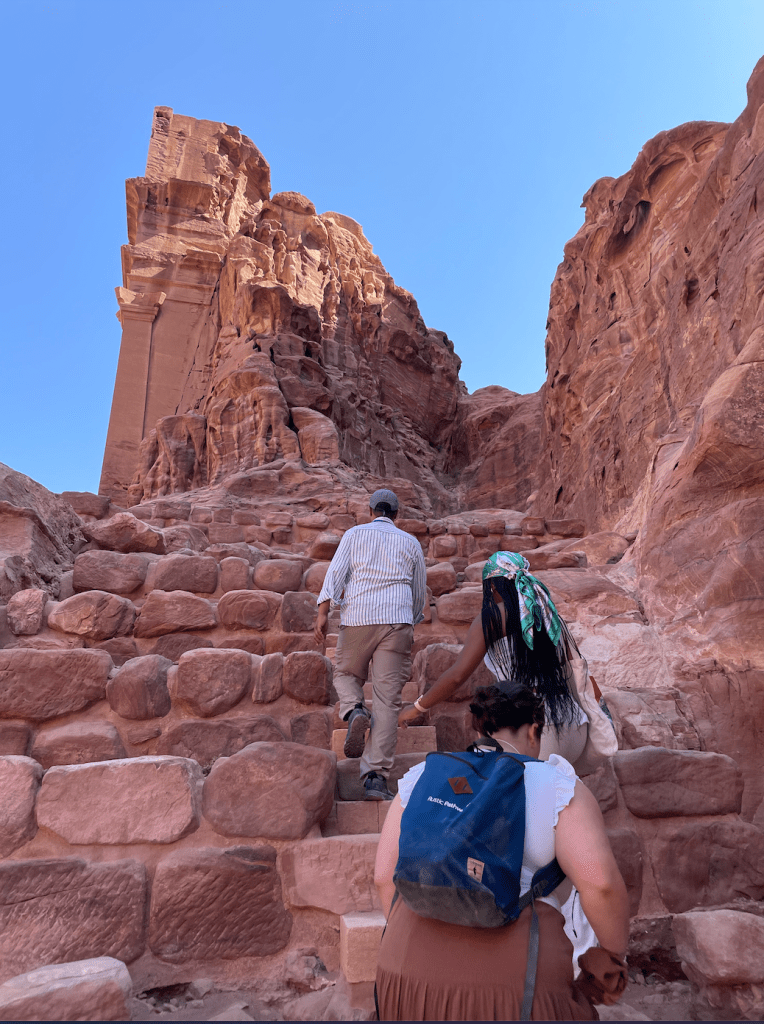
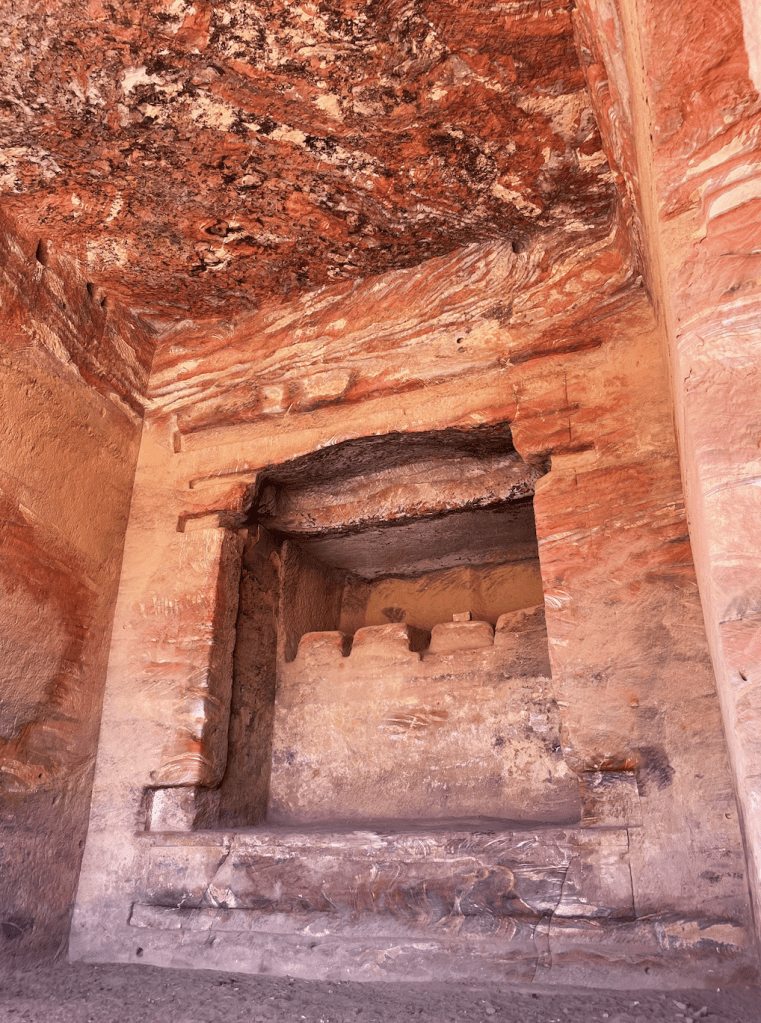

By this point, we had hit well over 20,000 steps in the hot sun, and I was unfortunately battling a bit of heat exhaustion. We made the long walk back to the entrance of Petra and our hotel, where we rested and packed up for the rest of the night. This day was truly a highlight within our entire trip! I’m so grateful to have been able to experience to such an architecturally, historically, and culturally rich city that has withstood years of occupation and natural disaster.
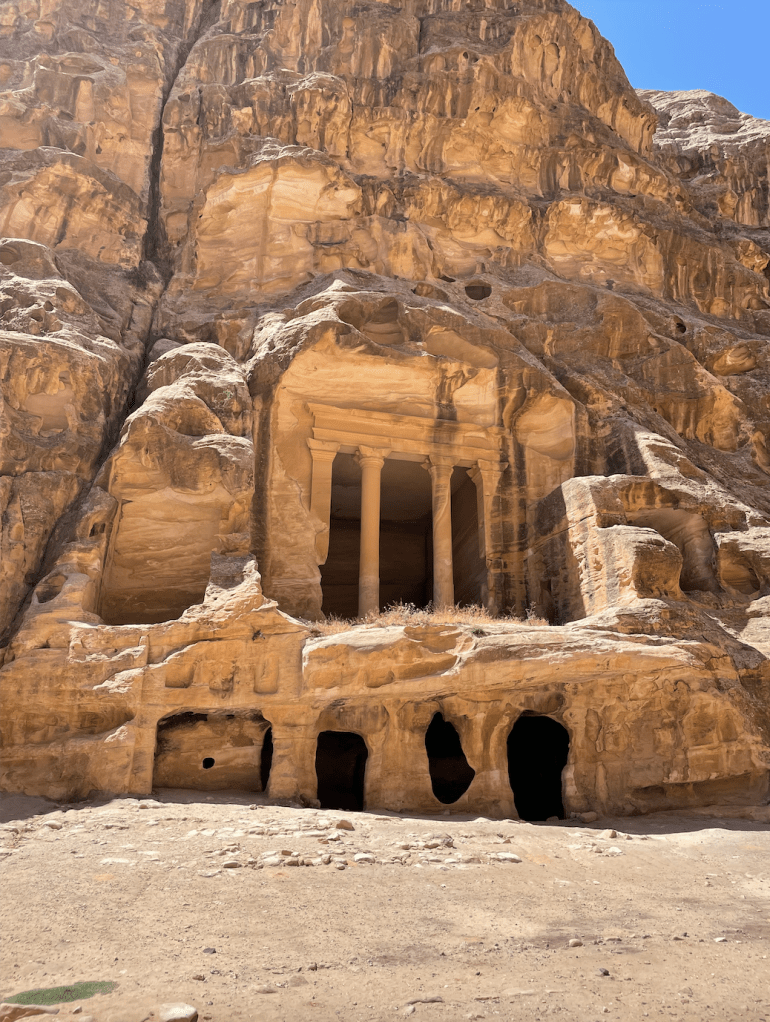
The next day, we packed up and drove to Little Petra. Little Petra is also a Nabatean city with buildings carved into sandstone facades, however it is much smaller than the main city area of Petra. We briefly walked around here in the morning exploring more of the tombs and caves.
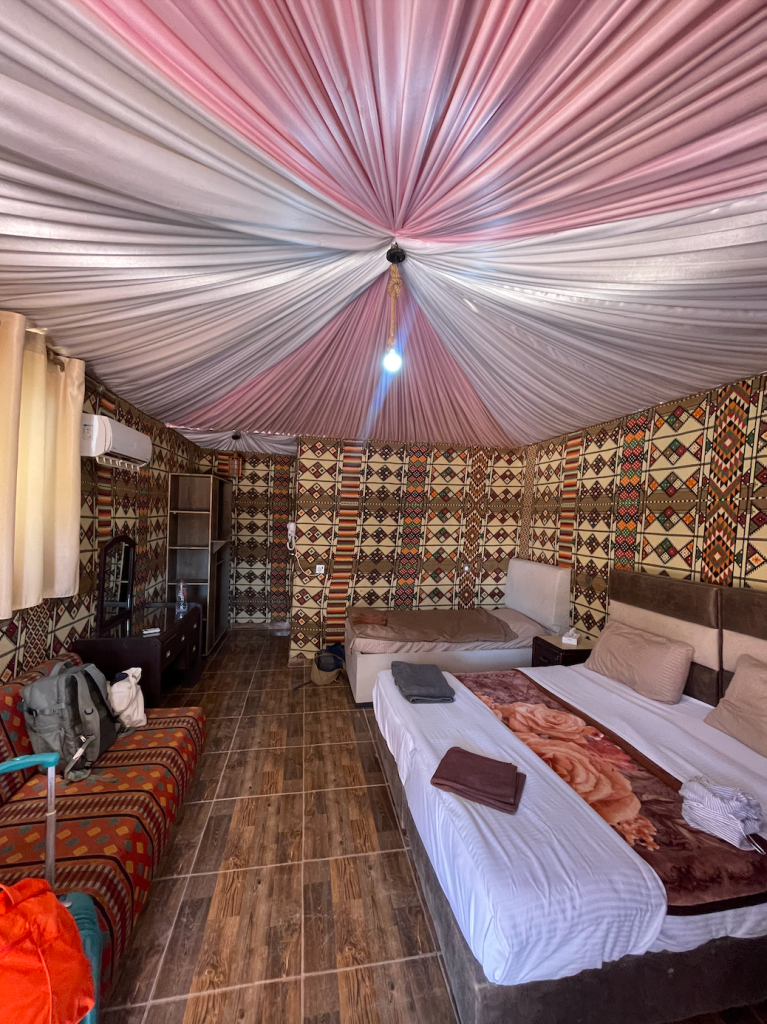
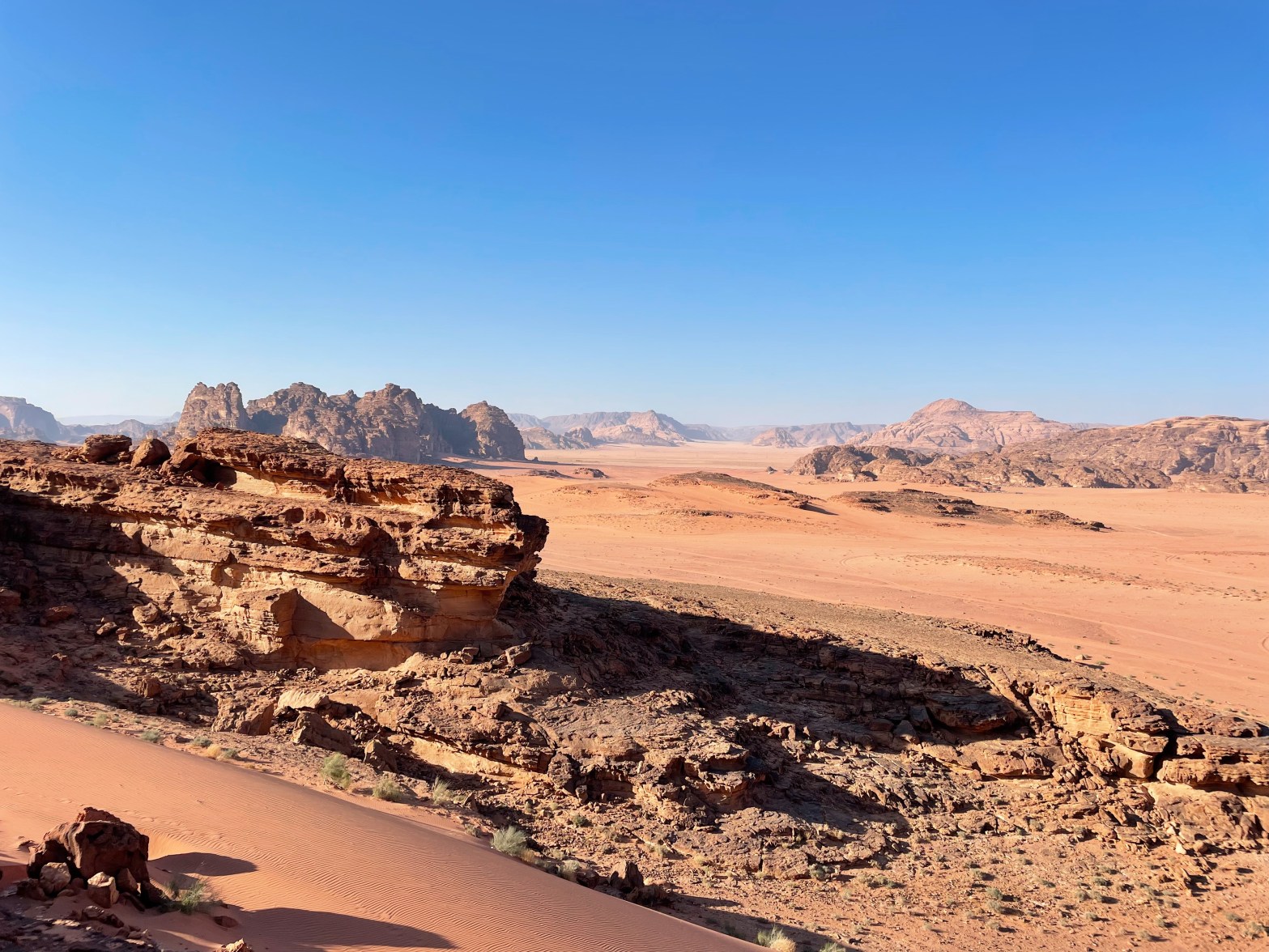
In the afternoon we headed to the desert, better known as Wadi Rum! Jada, Annie, and I had all been thoroughly looking forward to experiencing a night here! Wadi Rum is a protected area and a UNESCO World Heritage site with prehistoric civilization tours, hiking, rock climbing, and camping experiences. Wadi Rum is also the filming site for many popular movies such as The Martian, Dune, Star Wars, Transformers, John Wick, and more! We arrived at the Hasan Zawaideh Camp, located in the red dune area of Wadi Rum. Our tent was MUCH nicer than we anticipated, complete with two beds, a bathroom, and even air conditioning. We were glamping for sure!
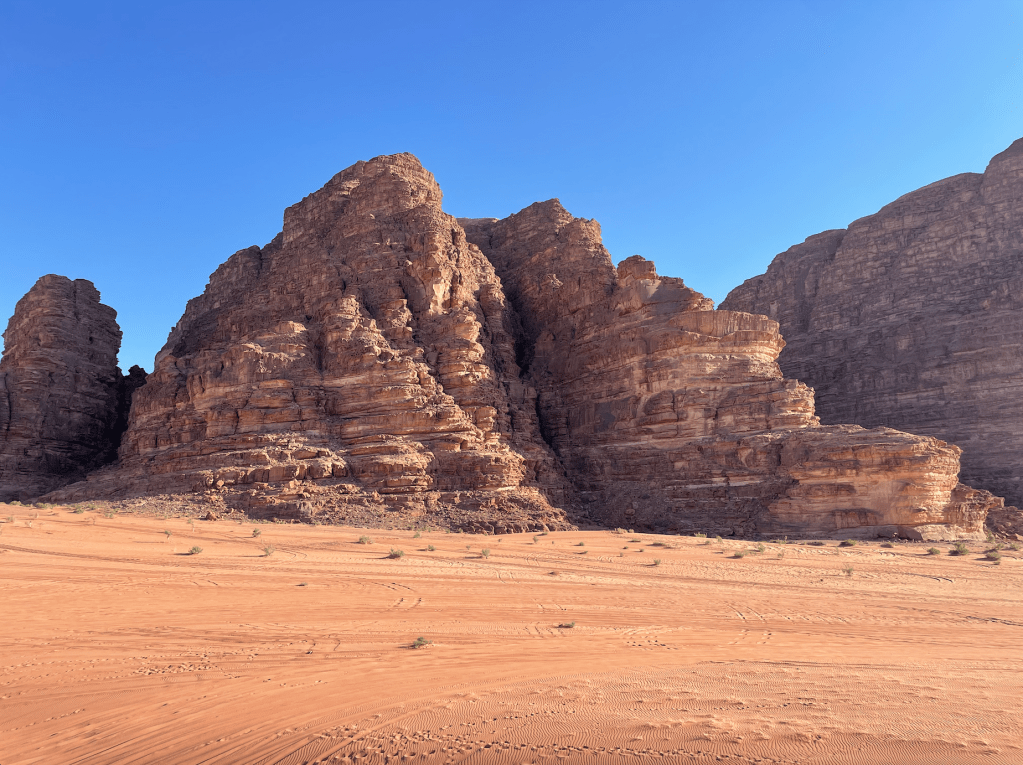
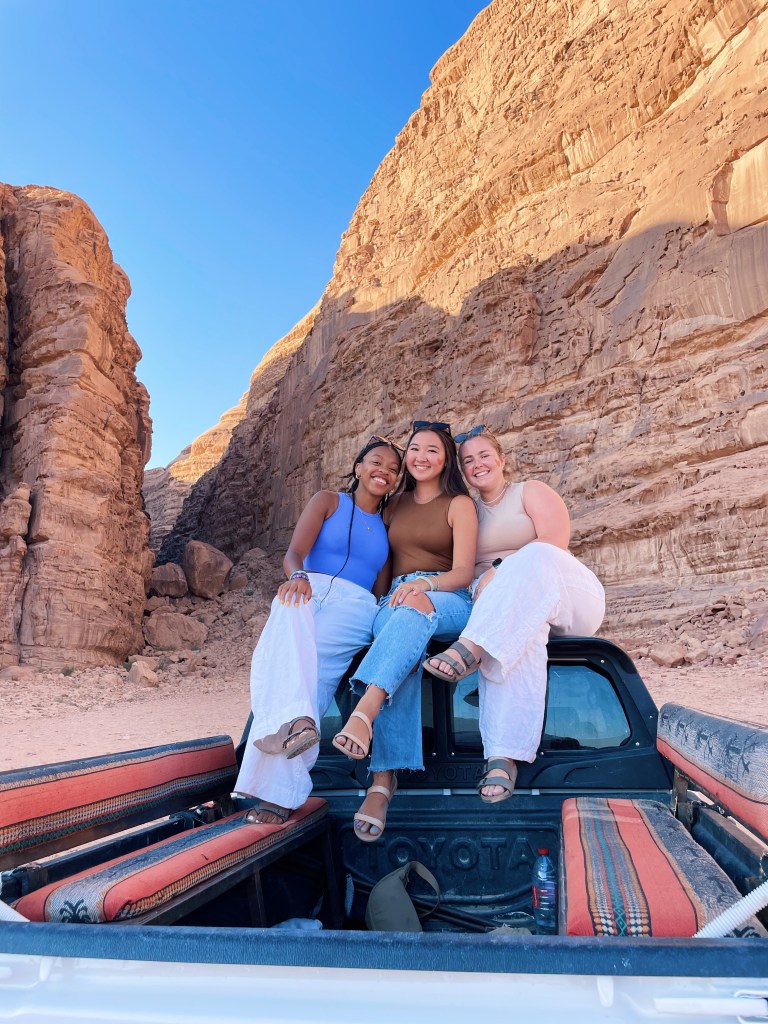
In the late afternoon, we headed out for a two hour jeep tour around the desert. We had an absolute BLAST riding on the back of pickup truck through canyons, sand dunes, and desert roads. We went so fast at certain points that it felt like we were on a rollercoaster!
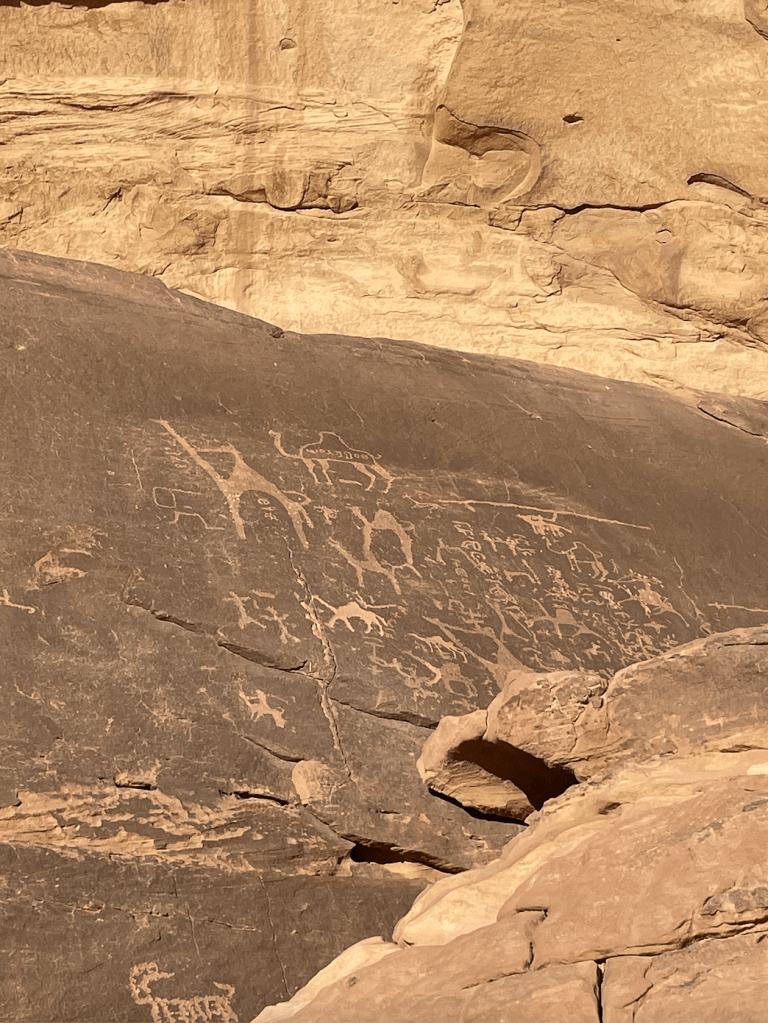

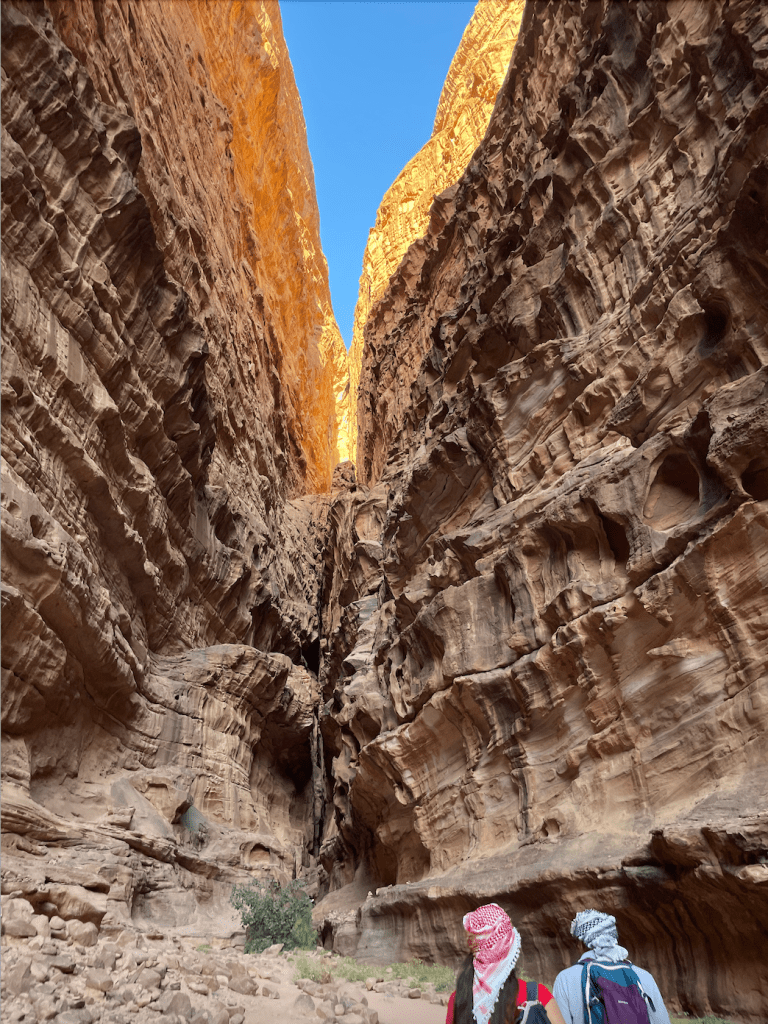
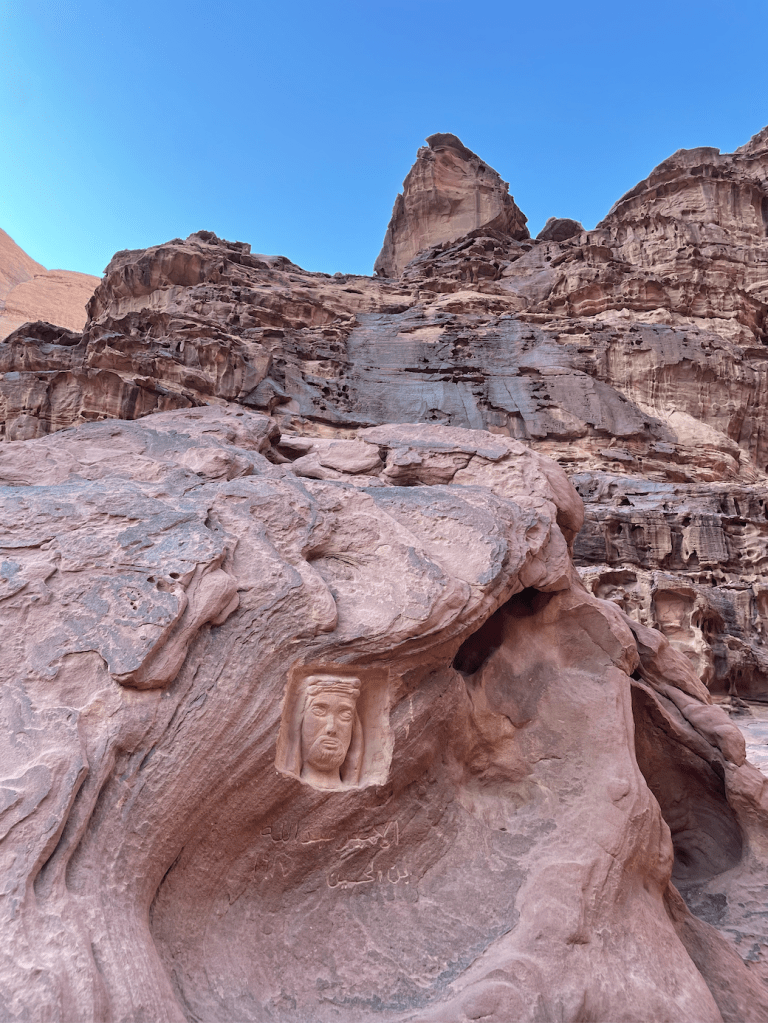
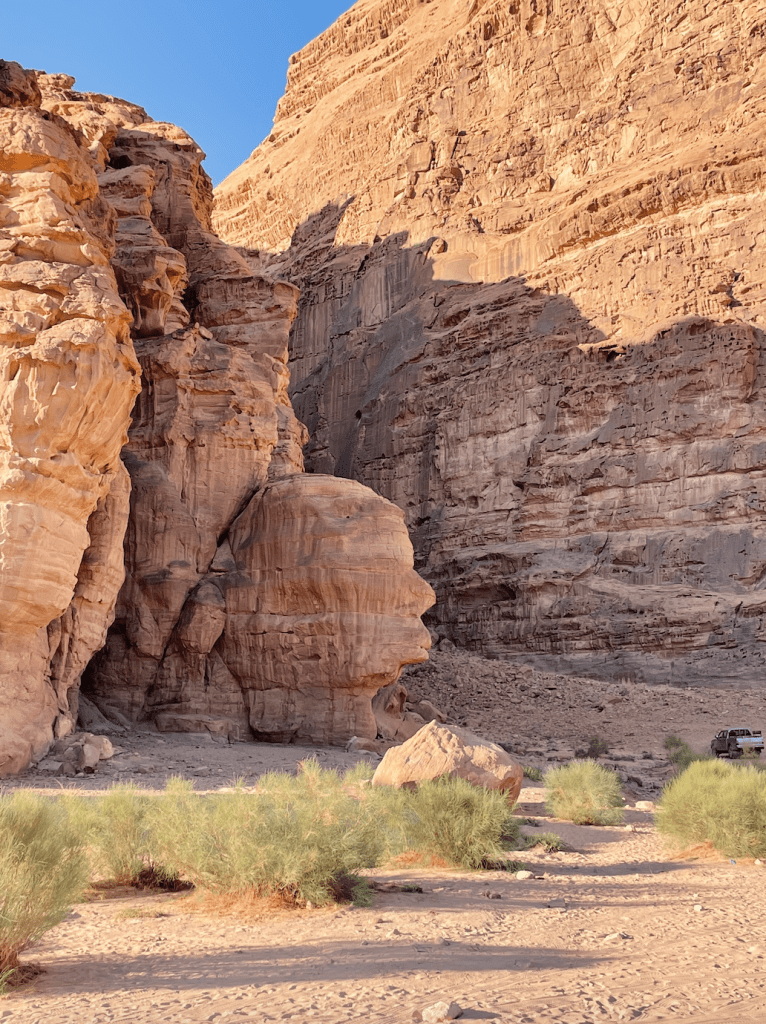
Throughout our tour we made a few different stops. First, we arrived at a huge sand dune which we ran up to see the amazing view from the top. It was so surreal to be completely surrounded by miles and miles of sand and desert environment. From there we drove to the Alameleh Inscriptions, 2000 year old carvings that depict a group of camels travelling north. Seeing such prehistoric inscriptions was absolutely mind blowing to me and a cool reminder of the Bedouin people who have lived here throughout so much time. Next, we were driven to Siq Um al Tawaqi, a narrow canyon with red sandstone cliffs and white sand dunes. Included in this area are inscriptions of Lawrence of Arabia and Prince Faisal as well as a tea house where we stopped for a drink. Our jeep driver did a great job of showing us around and pointing out all of the unique rock formations, such as one that looked remarkably like a face!
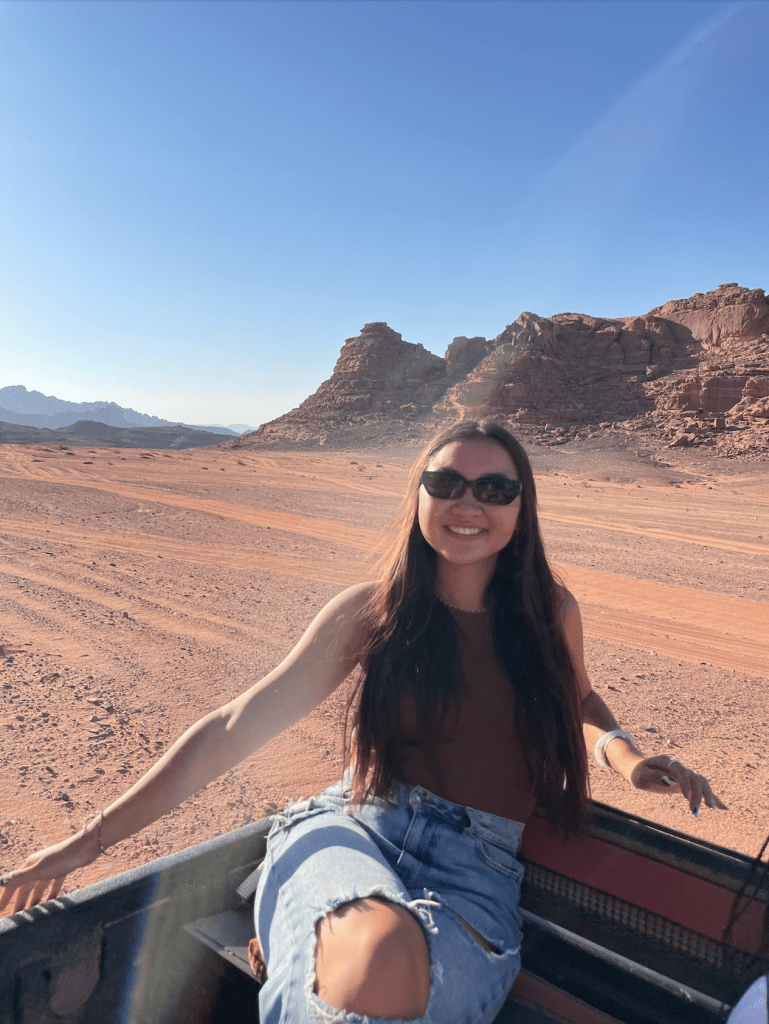
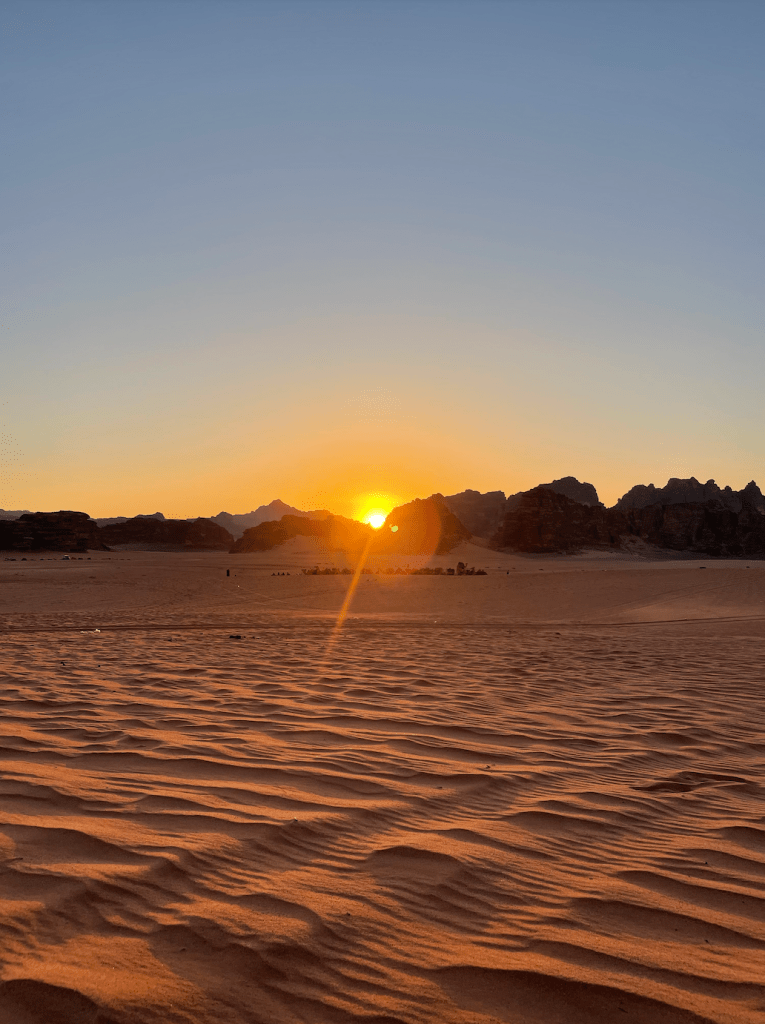
Finally, we drove to a quiet, sandy area to watch the sunset. This was such a relaxing way to end the day and reflect on the busy week we had just had. The view felt very peaceful as we watched the sun fall below the mountains, sand dunes, and groups of camels.

Once it was dark, we headed back to our camp for dinner. Our camp prepared a traditional Bedouin meal called zarb. To prepare this meal, lamb, goat, chicken, and vegetables are cooked underground in a cylindrical oven buried underneath the ground. This allows the meat and vegetables to slowly cook and for all of the rich flavors to blend. We got to watch as they pulled the meat from the ground which was such a neat experience. All of the food at the camp was delicious, with the meat in particular being my favorite.
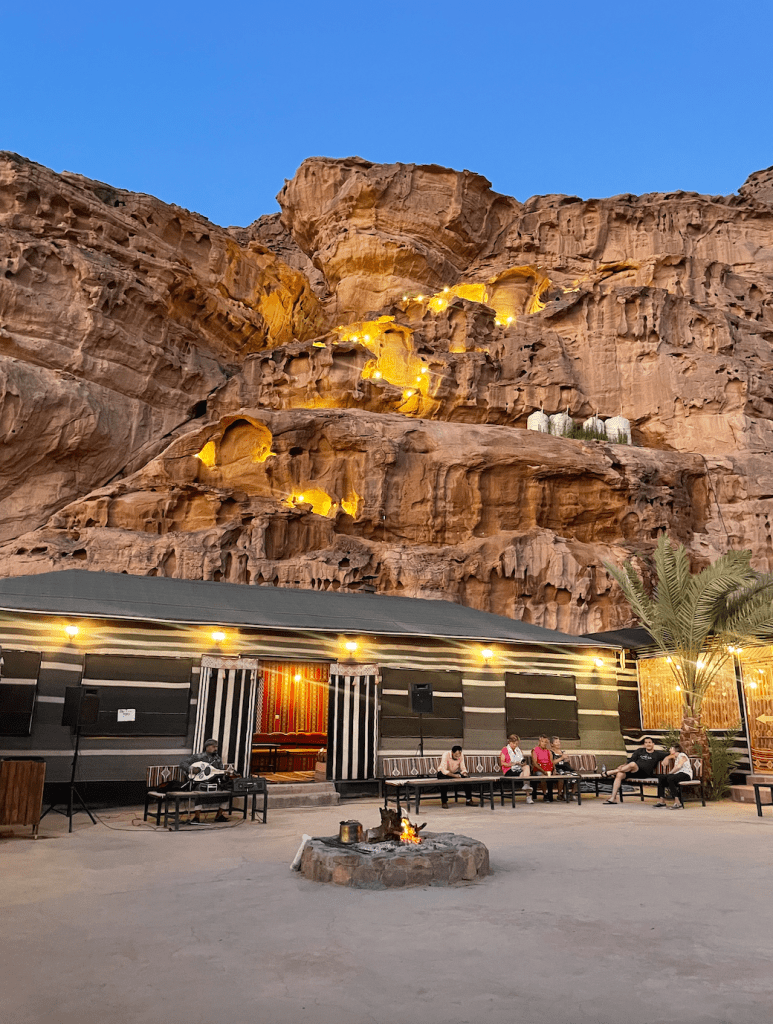
After dinner, we sat around a fire in the main camp area and enjoyed live music and dancing. Several of the camp staff performed dabke which is traditional Arab line dance. It was such a great end to our busy day and the dabke performances were so fun and exciting to watch. Before heading to bed, we laid out in the sand and stargazed for a bit. It was amazing to see how bright they were, and it was lovely to enjoy such views without typical light pollution.

The next morning, we woke up before the sun to enjoy a sunrise camel ride! While we were all pretty tired, we hopped on our camels and took off for a ride around the desert. It was so peaceful to be up while the desert was so quiet and empty, and it really felt like we were wandering around a whole other planet. We paused our camel ride on top of a sand dune to watch the sunrise over the mountains and enjoy the quiet golden hour.
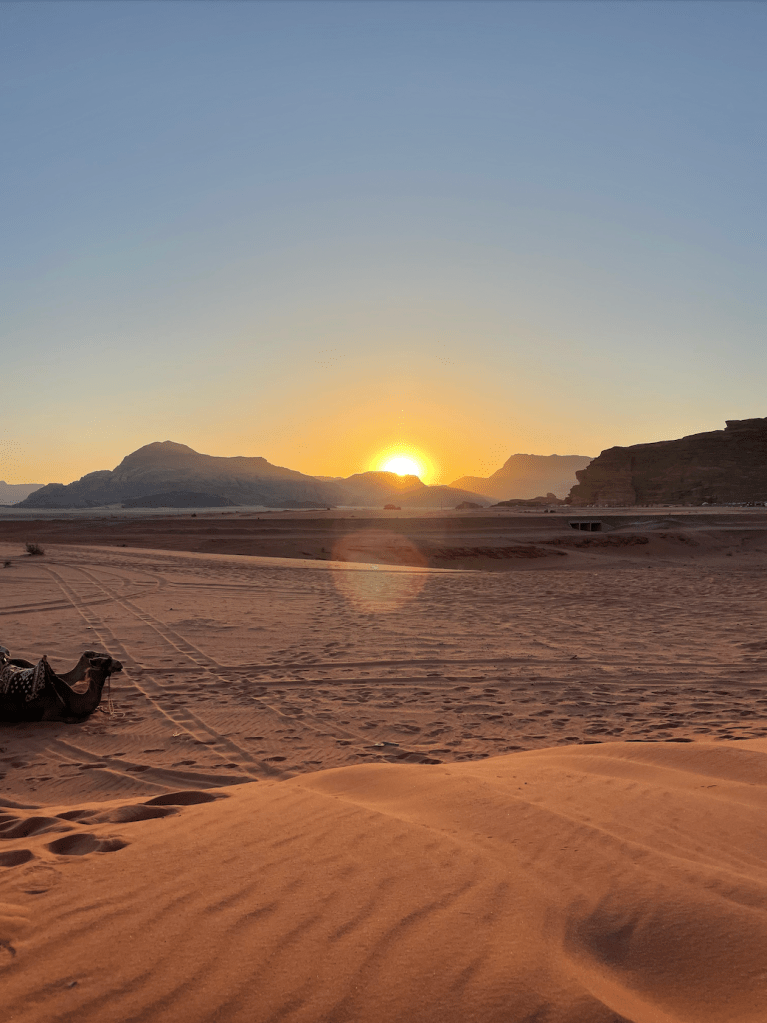


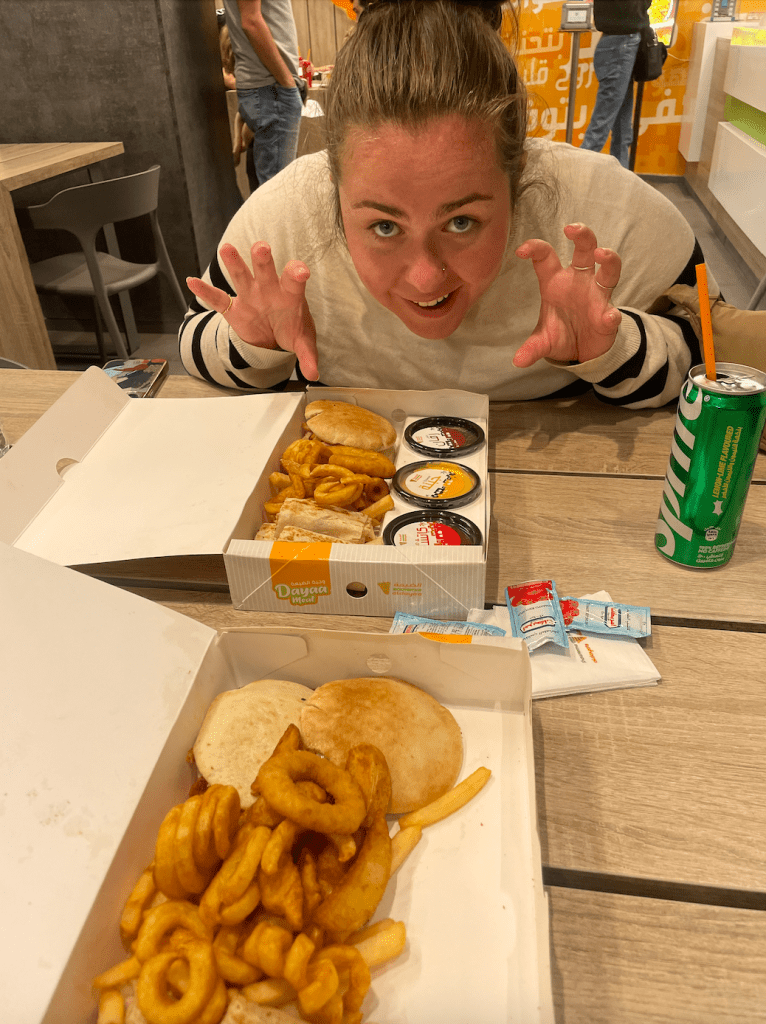
After returning to our camp and packing up, we set off to drive back to Amman. Back in Amman, we rested up after our long travel day and then headed to for dinner. We drove to Abdoun Circle, a neighborhood with numerous popular restaurants, cafes, and shops. Jada took us to Al Dayaa, a popular shawarma restaurant chain. We ordered a few boxes of their shawarma options which were all fantastic and certainly some of the best I’ve ever had.

On our final day in Jordan, we explored Jerash, a city that flourished during the Greek, Hellenistic, Roman, and Byzantine periods until it was largely destroyed by an earthquake in 749. Today, the ruins are considered one of the best preserved Greco-Roman cities, with Jerash even being called the, “Pompeii of the Middle East”.
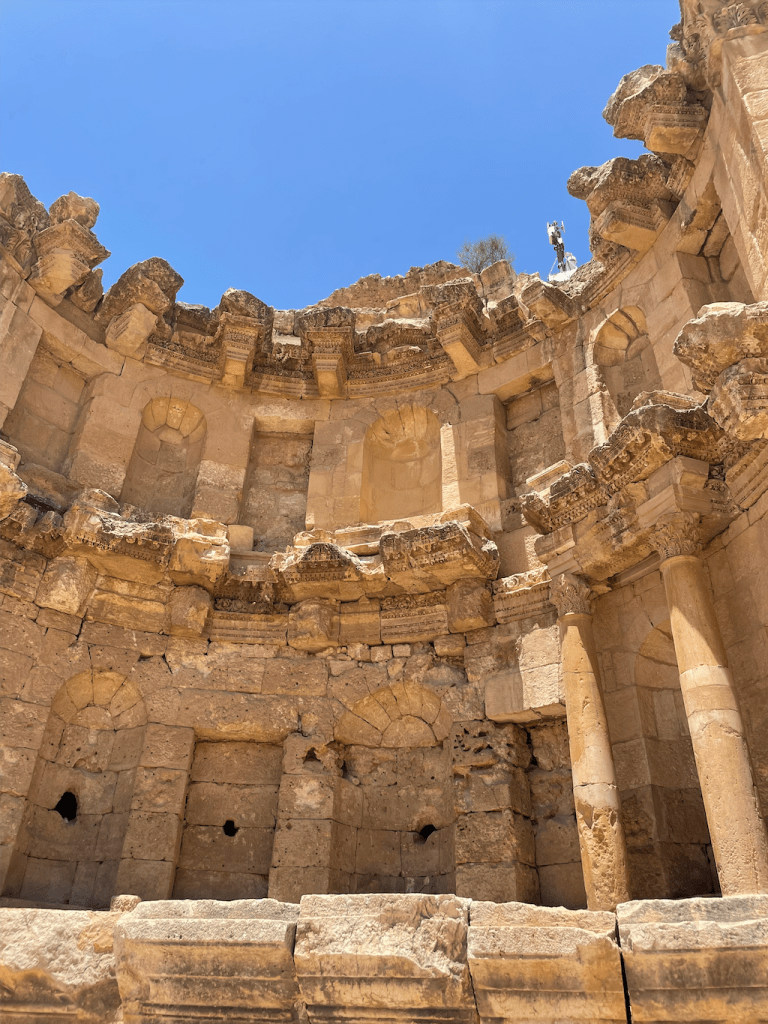
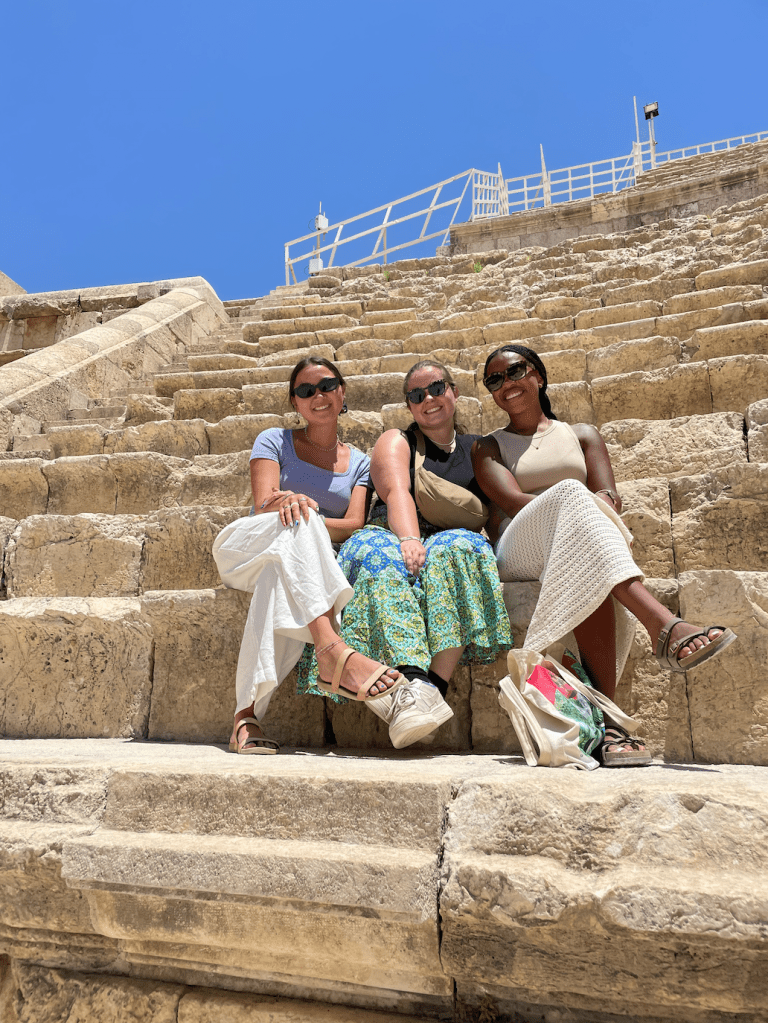
First, we walked through the hippodrome, an arena where gladiators and charioteers would perform for crowds. This space was massive, fitting over 15,000 spectators. From there we walked to the oval plaza, a spacious area surrounded by tall columns. This plaza led into Jerash’s colonnaded street, which is still paved with the original stones. This street is one of the focal points of Jerash and even contains an entire underground sewage system below the street. Amongst the other historical sites were a Byzantine cathedral, the Nymphaeum, the North Theater, South Theater, and an archaeological museum. Walking around Jerash was fascinating, as it really felt like you were walking through an ancient Roman city. We spent the rest of our afternoon shopping to get gifts for family and friends, before packing up to leave Jordan.

Overall, this trip to Jordan was a wonderful week of history, delicious food, and amazing company. It was remarkable to see the blending of culture, religion, art, and language in Jordan due to the passing of power and control throughout the years. Each landscape was infrastructurally adapted to whatever cultural group was in power, and the progression of the land to what is now modern-day Jordan is amazing. Additionally, I loved the variety of environments we were able to experience from the city, to the Dead Sea, to the desert. Jordan is truly a place of diversity and the perfect blend of adventure and exploration!
 Rachel's Blog