
After months of texting, calling, and planning, I finally embarked on a trip to Jordan with two of my good friends Jada and Annie! They first flew into Morocco where we spent about a week exploring Marrakech, Ouzoud, Essaouira, and Casablanca. It was incredible to have close friends visit, and I had a great time showing them around all my favorite places in Morocco.
After a long day of travel from Casablanca, we landed in Amman, Jordan. We booked our trip through a tour company, which was highly convenient considering that all of our transportation, site visits, and accommodations were covered. For the first day on our itinerary, we had a free day to explore Amman on our own. Since Jada has studied abroad in Jordan twice, she was our tour guide for the day and took us around to all her favorite spots.
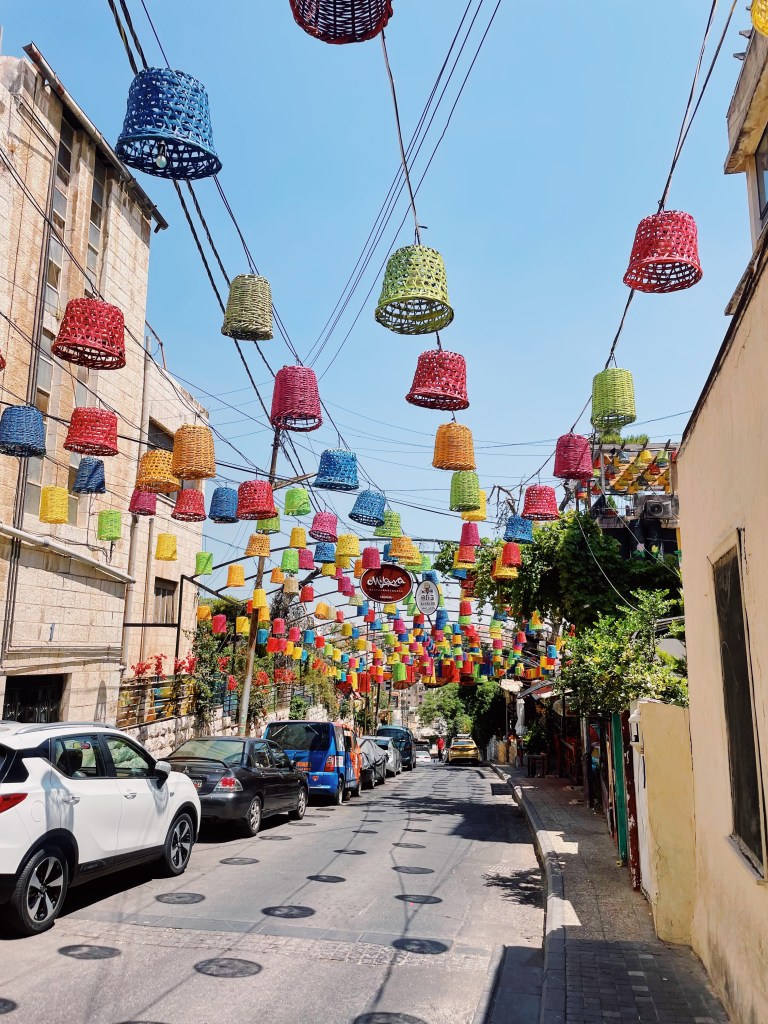
We started off on Rainbow Street, a popular street in Amman containing lots of restaurants, cafes, and shops. We did some shopping and had a great time walking around the quiet streets which felt relaxed and more residential.
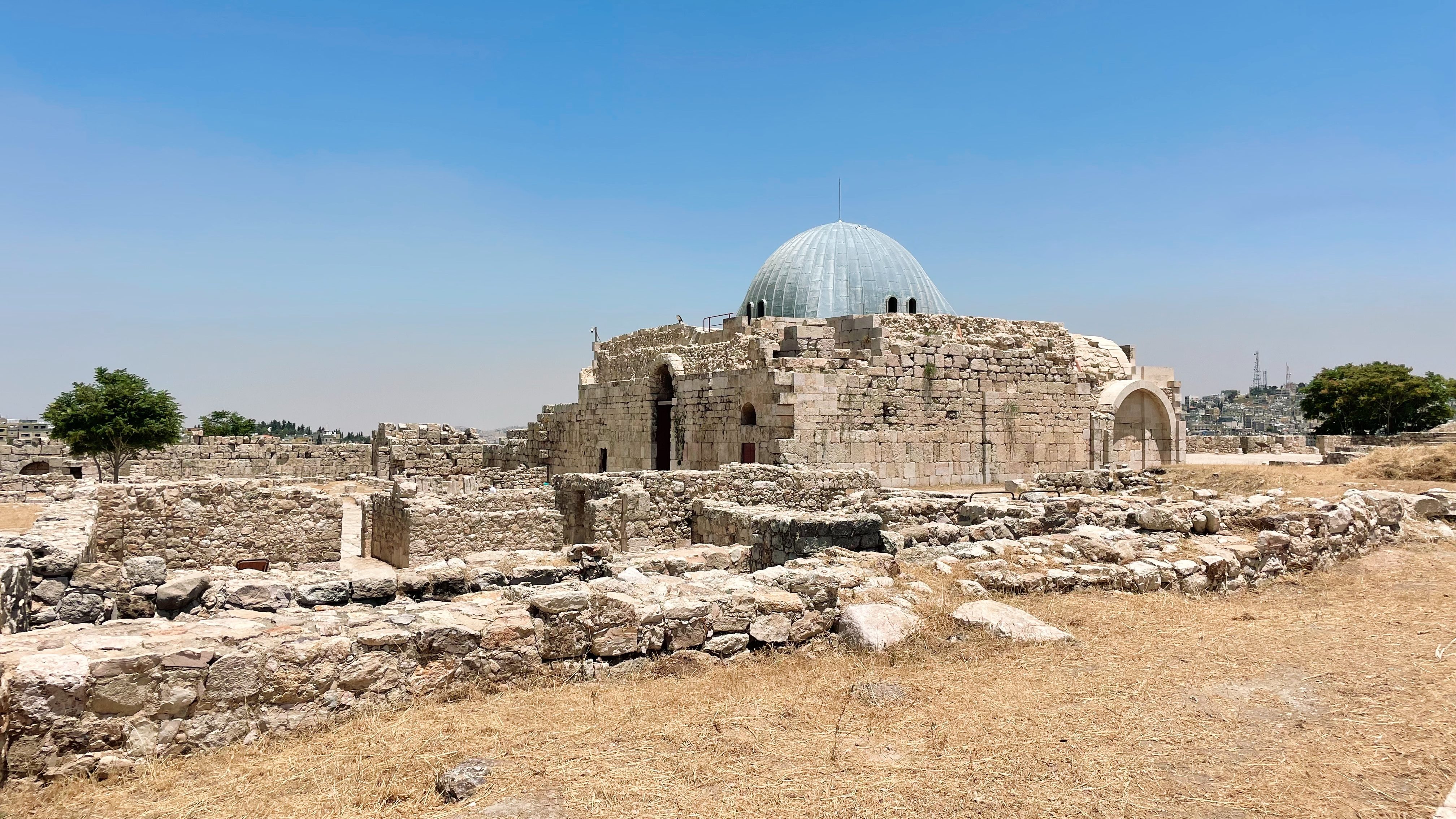
We then headed over to the Amman Citadel, which is an archaeological site on top of Jebel Al Qala’a, overlooking the city. The construction of the citadel dates back to the Bronze Age (1800 BCE) and was occupied by moving groups during the Iron Age, Roman, Byzantine, and Umayyad eras. The most famous site at the citadel is the Temple of Hercules built by the Romans. While most of it is in ruins, some of the pillars are still intact and were an incredible sight.


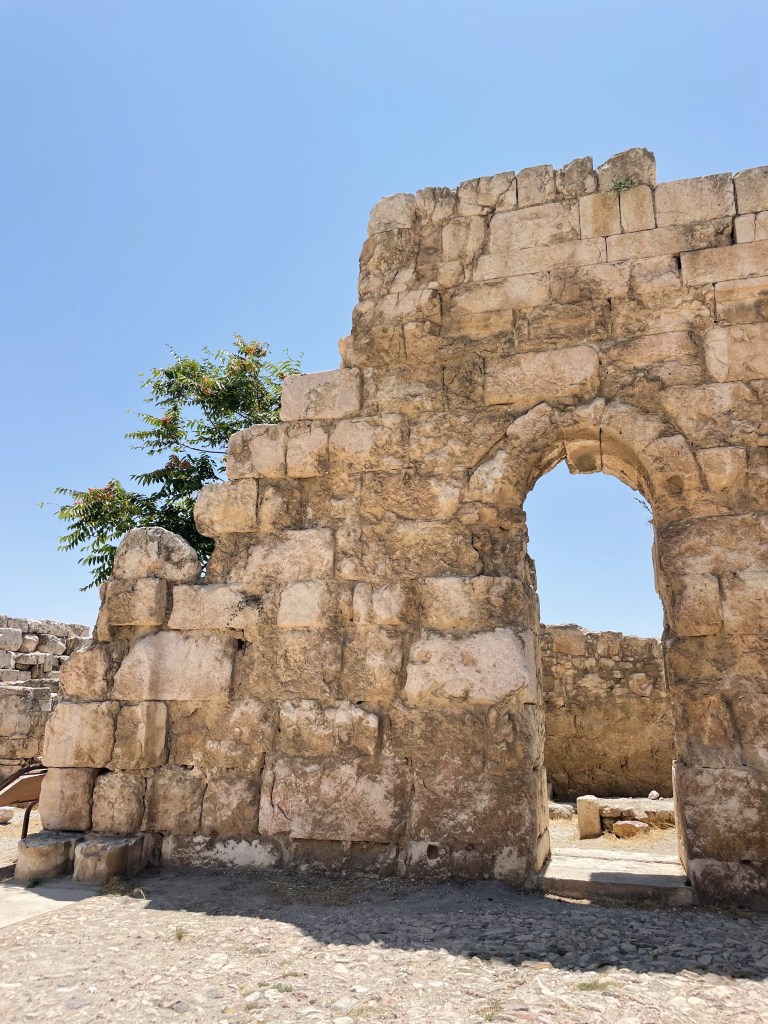
In addition to the temple, we walked around ruins of the Umayyad Palace and a huge entrance hall built over a previous Byzantine church. Near the palace was a small archaeological museum showcasing a variety of artifacts dating all the way back to the Paleolithic period. I loved exploring this area and learning about the extensive history of Amman. It’s super interesting to consider how many different people groups have occupied and changed the city over the years.
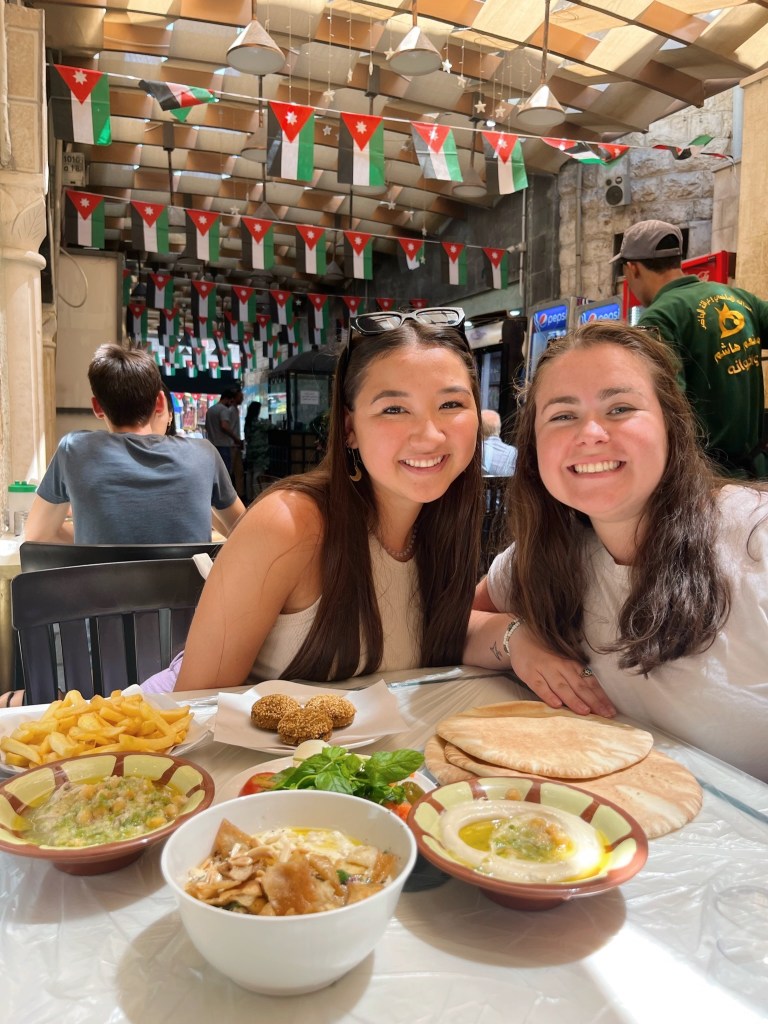
For lunch, we headed downtown to Hashem, one of the oldest and most popular restaurants in Amman! It was opened in 1951 and remains pretty much unchanged. The restaurant is sandwiched in a small alley, giving the place an open air, street food feel. We ordered a bunch of small plates including the pita, hummus, fattoush, and falafel which were all delicious.

For a little dessert, we grabbed some knafeh at Habibah Sweets. Jada and I had been counting down the days until we were able to have knafeh in Jordan so we were so excited to make this food stop. I’ve had knafeh in Morocco, but nothing compared to the knafeh from this famous bakery opened in 1951. We tried the cheese and cream knafeh which was so rich and super filling.
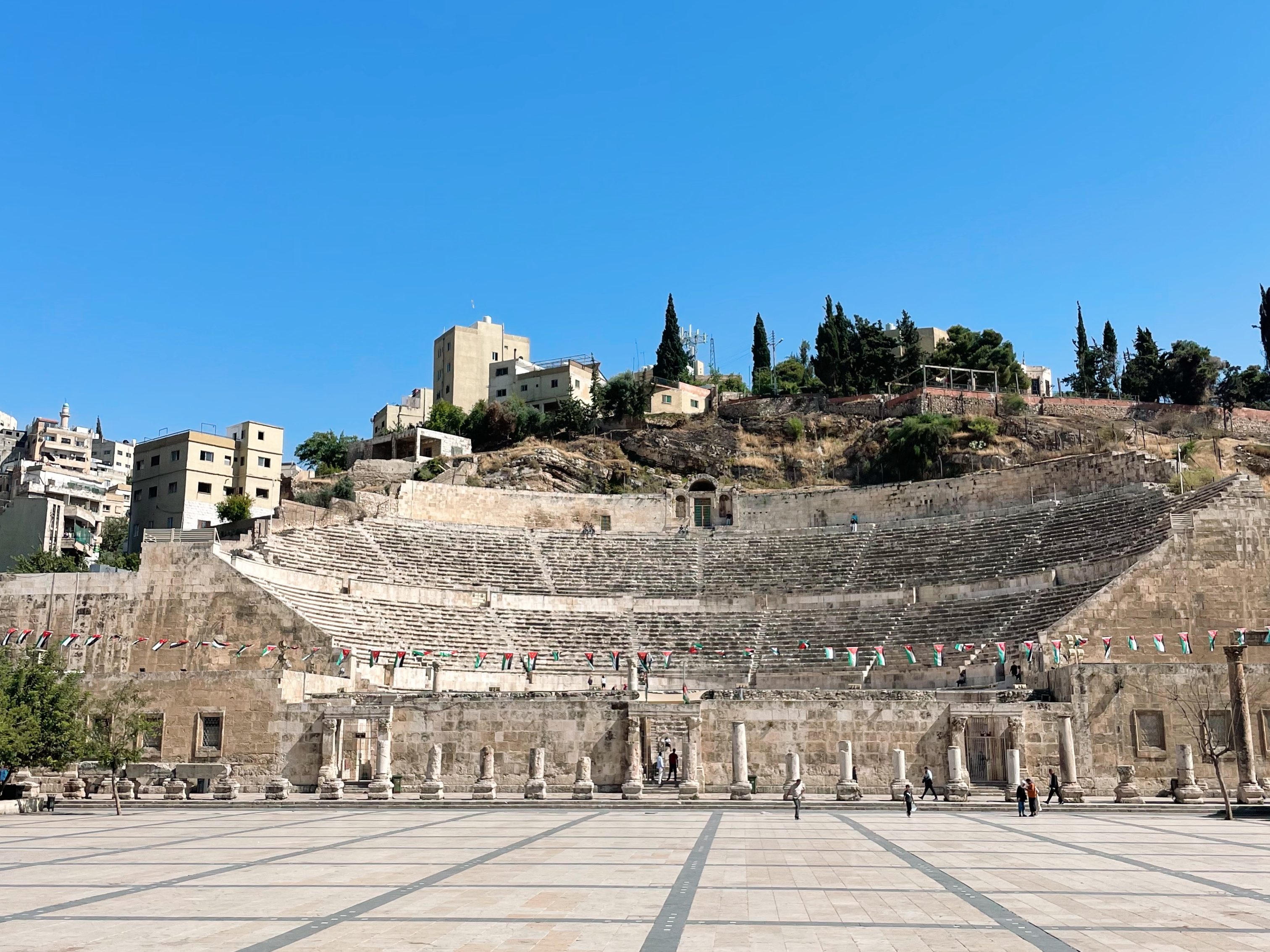
After lunch we walked around the shops in downtown Amman, which were busier and more crowded but filled with lots of neat souvenirs and trinkets. We then visited the Roman Theatre, built in the 2nd-century when the city was known as Philadelphia. The amphitheater was massive, built into the hillside and seating 6000 people. It was a little too hot for me to climb all the way to the top, but we sat on the amphitheater steps and walked around the nearby museum.
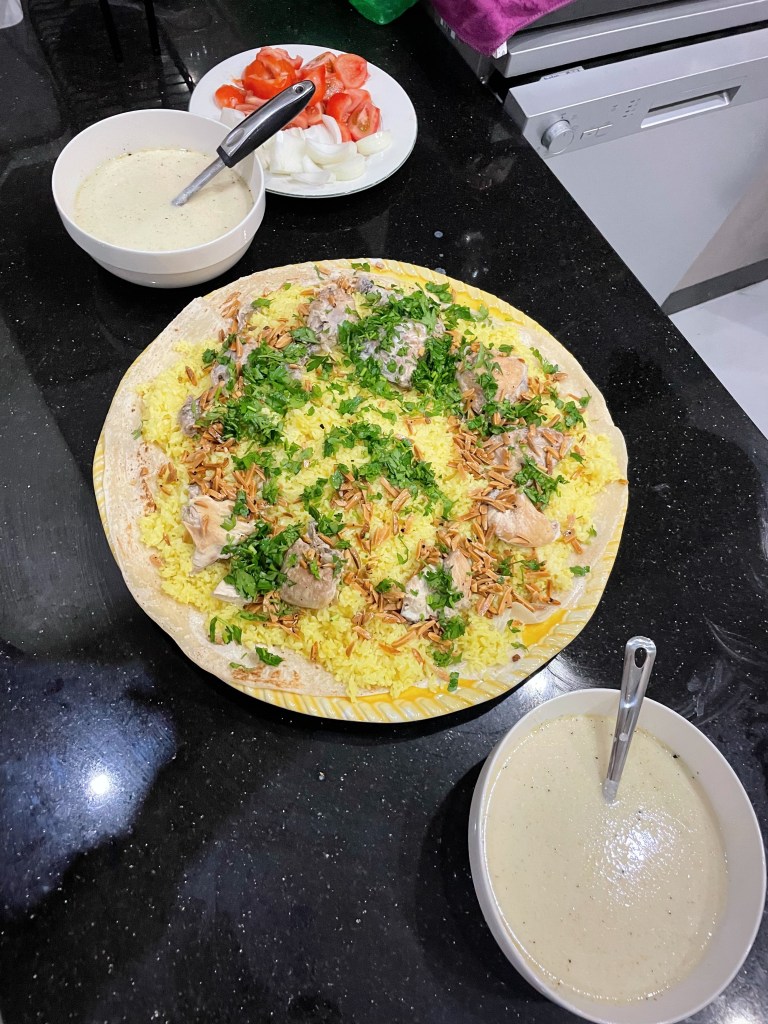
In the evening, we had the amazing opportunity to visit Jada’s host family, who she stayed with while she was in Jordan in 2017. It was so sweet to meet a few of the family members and they were thrilled to have Jada back after so many years. Her host mother made us homemade chicken maklouba, a rice dish that is flipped upside down and filled with meat, herbs, nuts, and a labneh sauce. This was by far one of the most delicious meals we ate on the entire trip and we completely stuffed ourselves full. It was a very meaningful reunion for Jada and her host family, and they were incredibly kind and welcoming to Annie and me, making us feel right at home.
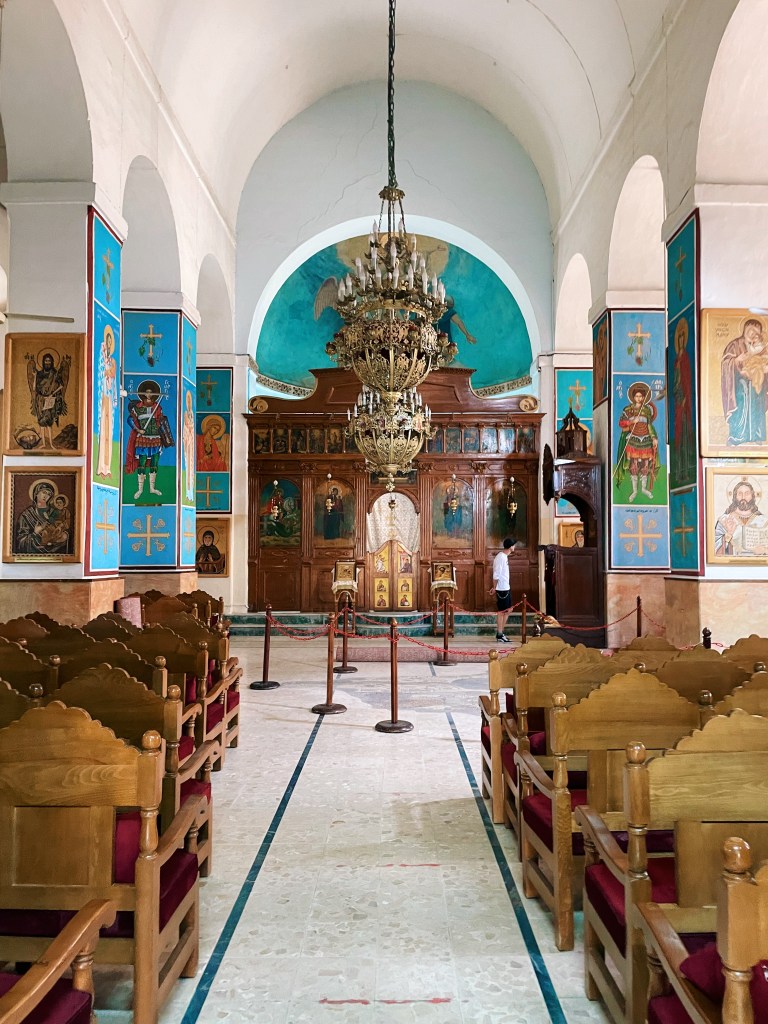
The following day we headed out early in the morning to hit the road towards the Dead Sea. I was super excited for this day, as we had several historical stops on the way. We drove towards the city of Madaba and stopped at St. George Greek Orthodox church.
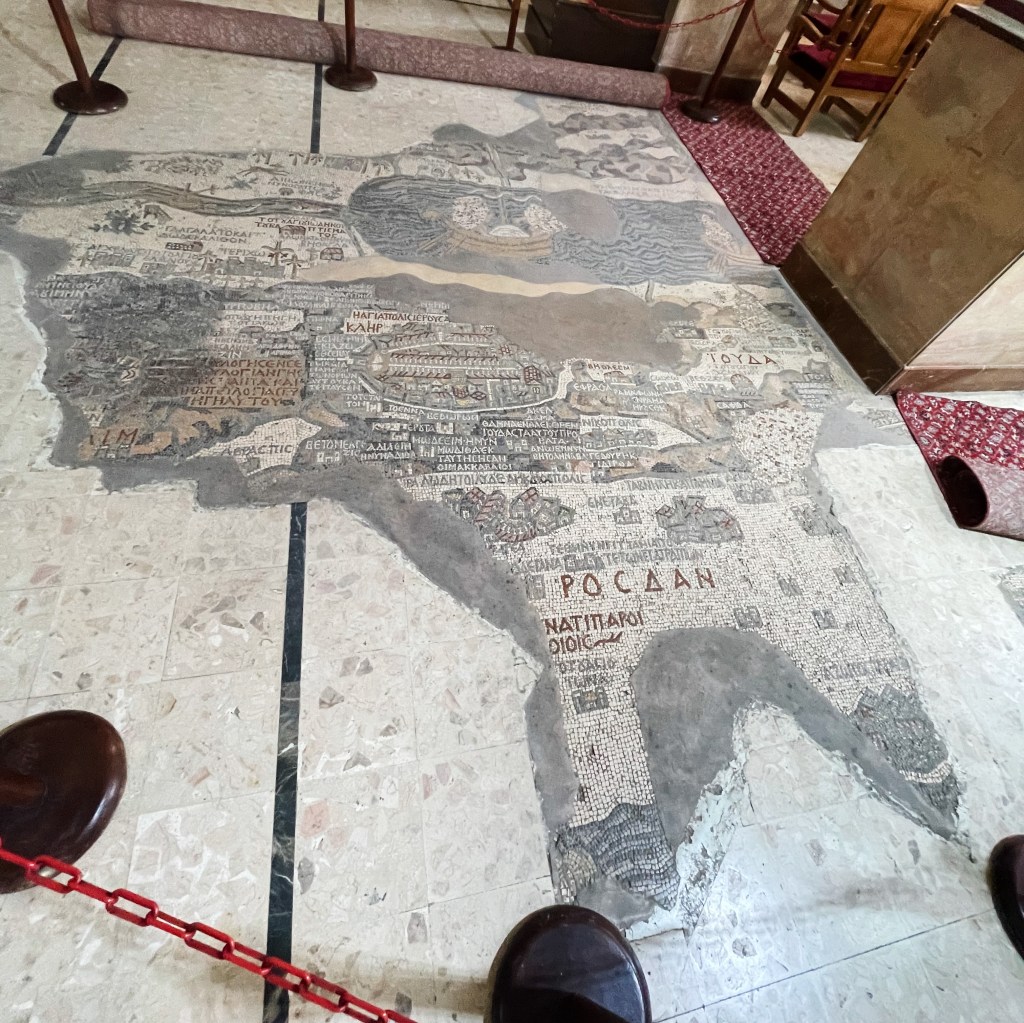
The church is famous for the mosaic remnants that have survived since AD 560 and display the oldest map of Palestine in existence. The map depicts the region from Egypt to Palestine and is estimated to have contained over two million pieces in its original form. It was amazing to see such an old piece of history and I loved looking at all the intricate mosaics and paintings in the church.
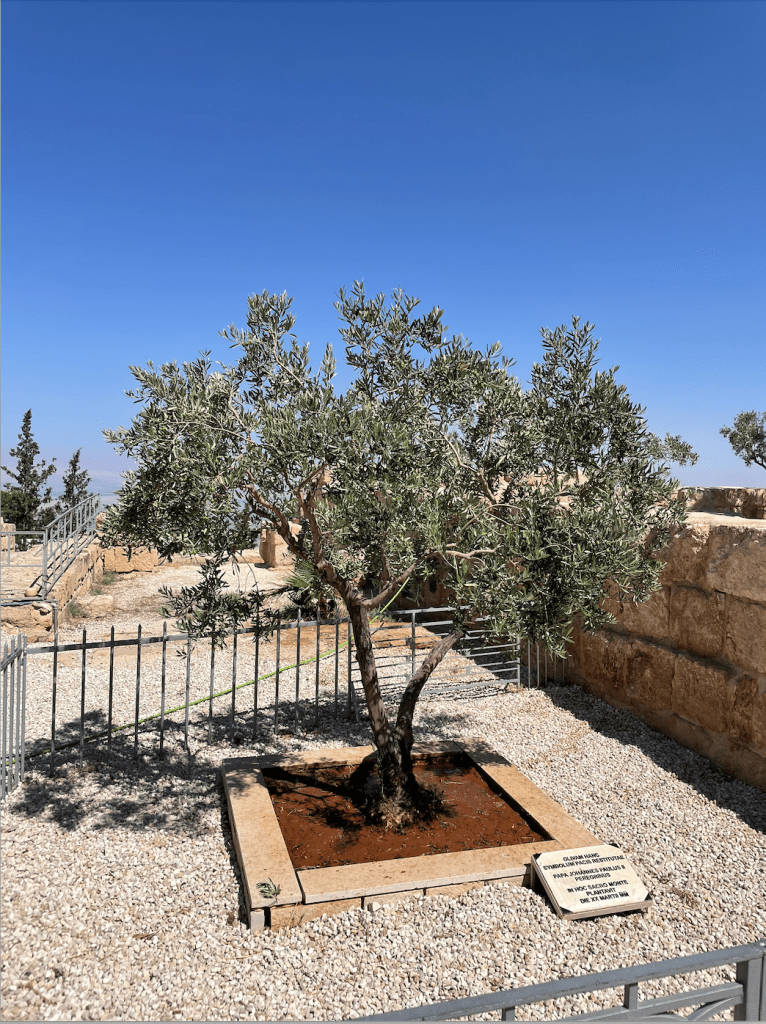
Next, we drove to Mount Nebo, a religiously significant mountain believed to be where Moses looked upon the Promised Land before his death. Walking around the mountain there were several memorial pieces for Moses and Christian history, including a small monastery built by Egyptian monks, now filled with Byzantine mosaics. There was an olive peace tree planted by Pope John Paul II and a beautiful serpentine cross sculpture symbolizing serpent taken by Moses in the desert and the crucifixion.
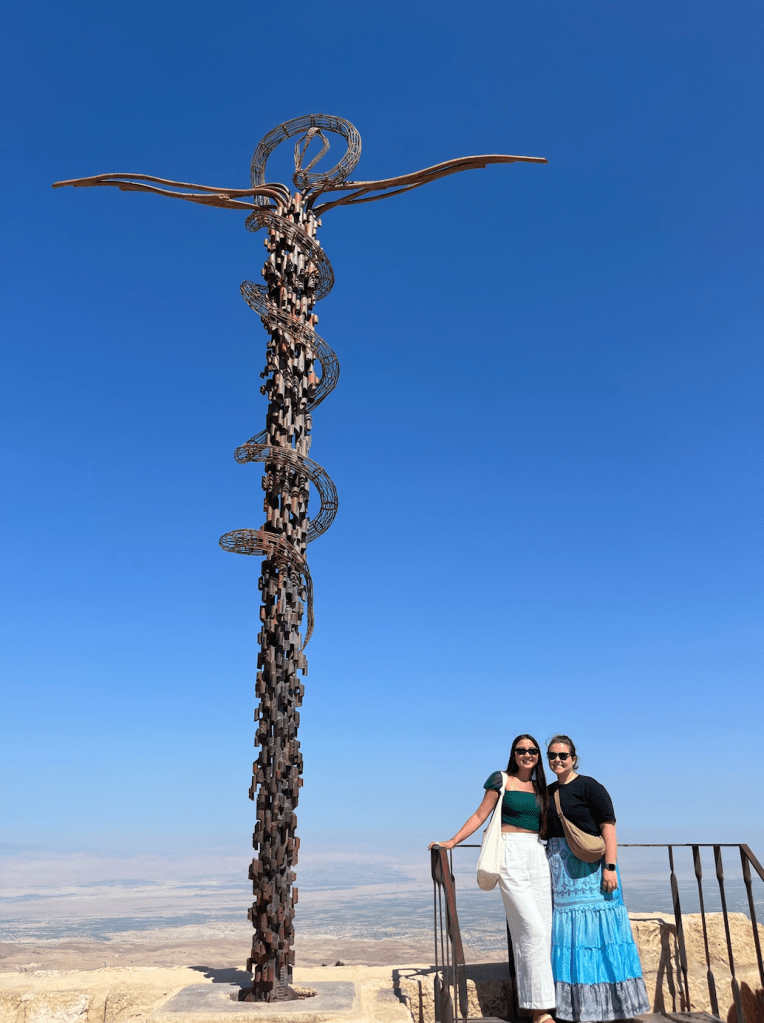

My favorite part of this site was looking out over the viewpoint on the same landscape Moses would have seen. We got lucky that it was such a clear day, and we were able to view the Dead Sea, Bethlehem, Jericho, and Jerusalem from the mountaintop.

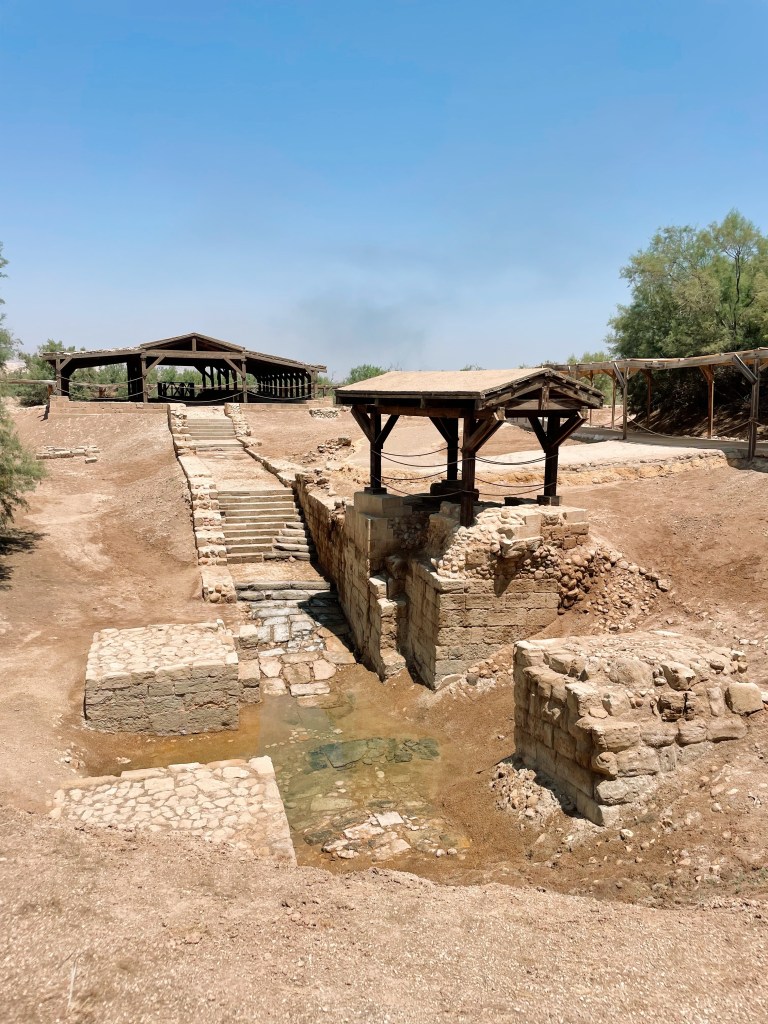
From there we drove to Al-Maghtas, which is an archaeological site on the eastern bank of the River Jordan. Located here are several churches, chapels, a monastery, caves, and the site where Jesus was baptized by John the Baptist in the River Jordan. We had a guide walk us to the baptism site, which had been identified by several biblical and historical accounts throughout the years. While the river is quite dried up in this location after thousands of years, it was surreal to be at such a religiously significant place! We walked to another area where the river where we could stand just about ten meters from Israel and even wave to people on the other side.
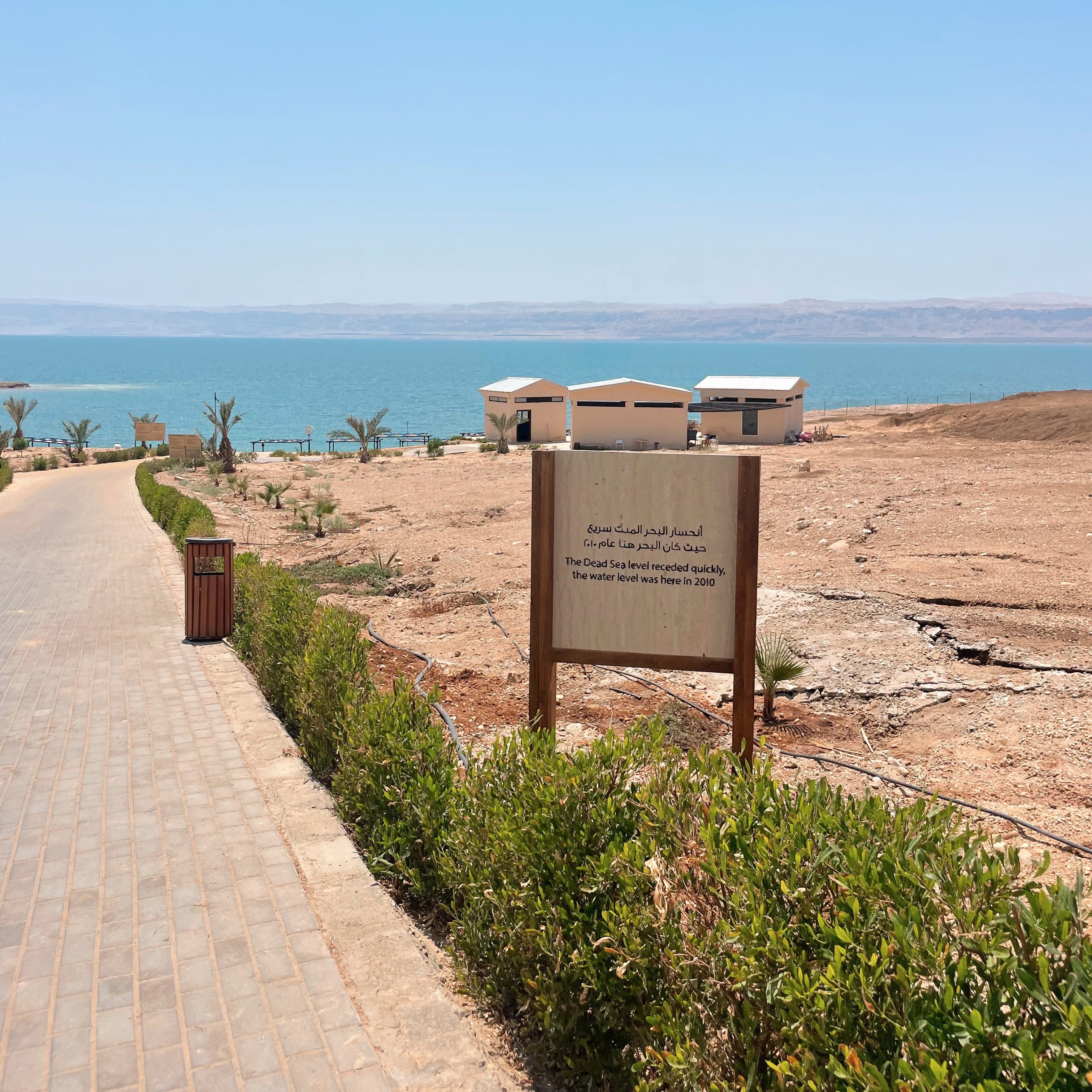
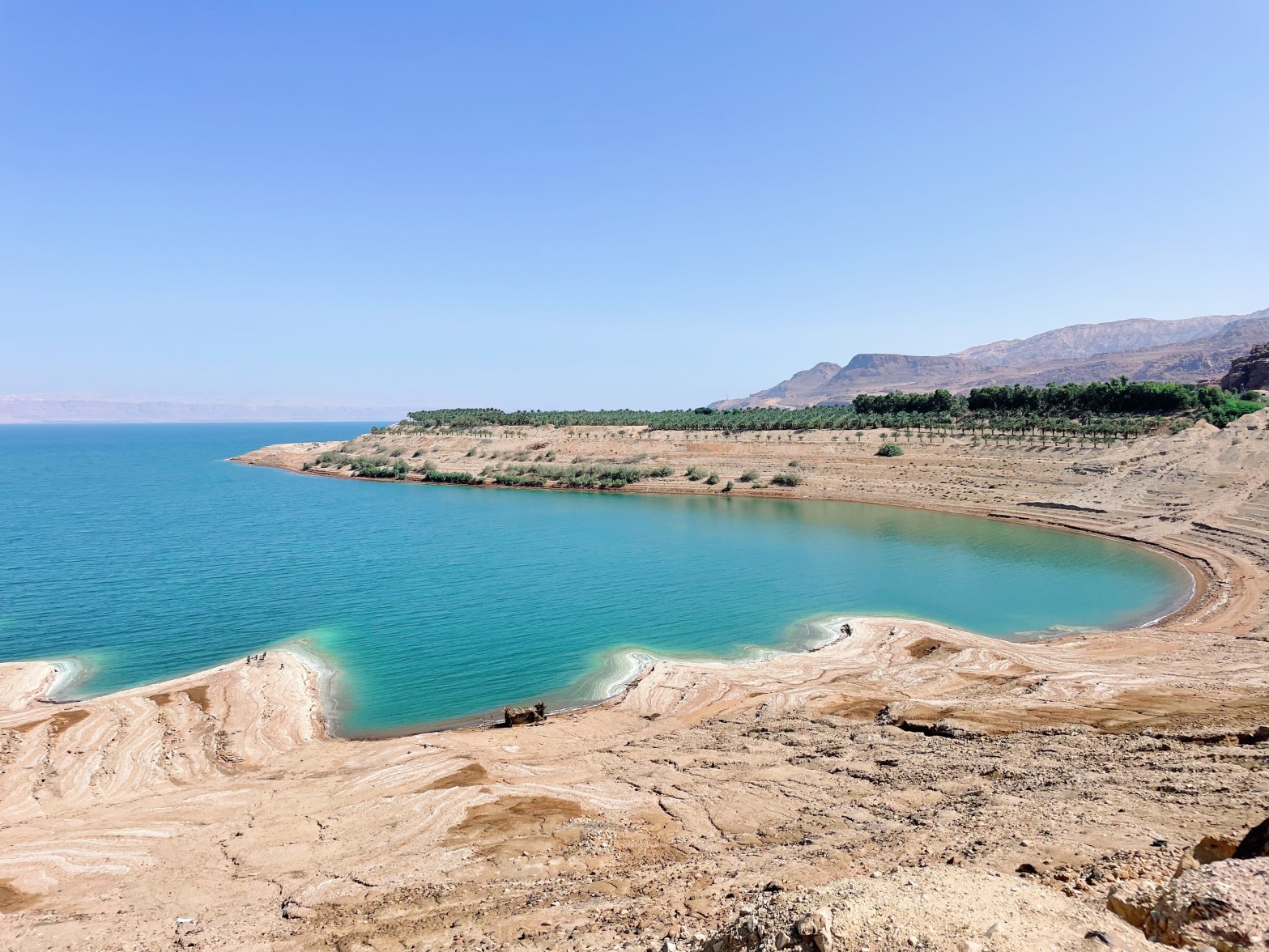
After our tour, we headed towards the Dead Sea and checked into our new hotel. Immediately we headed down to the water, which was just a short walk from our hotel. The Dead Sea is a landlocked lake between Jordan and Israel and is named for its high salt concentration which is inhospitable to any aquatic life. This area is the lowest elevation on the surface of Earth being 400 meters below sea level! As we walked down the path, there were signs indicating how much of the water has receded over the years. The water level drops about four feet every year as Israeli, Jordanian, and Syrian factories have been diverting freshwater sources that feed the Dead Sea and extracting Dead Sea water for decades. This made me even more grateful that we were able to visit such a unique place while it is still around.


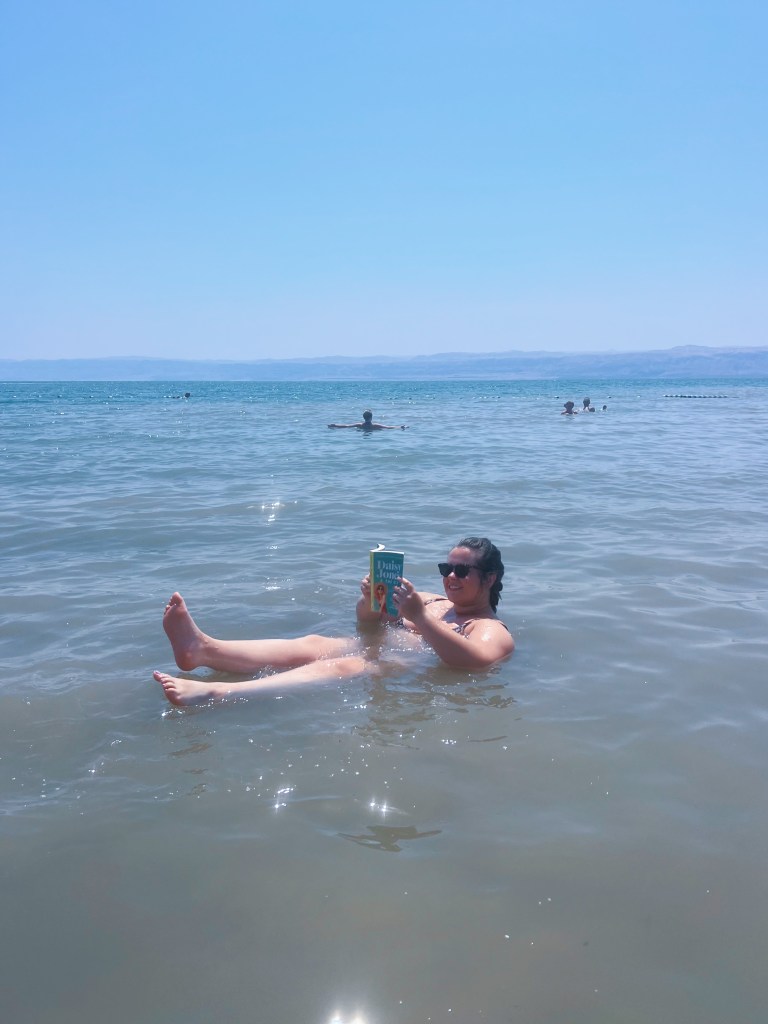
We lathered ourselves with mud and then swam around in the water, being extremely not to get the salty water in our eyes. It was such a cool phenomenon to experience as we were able to float so easily on the water and it felt almost impossible to sink down at all. I loved relaxing and floating around, and my skin felt much smoother after our Dead Sea mud scrub. Overall, the Dead Sea was one of the highlights of the whole trip as it’s always been an item on my bucket list!
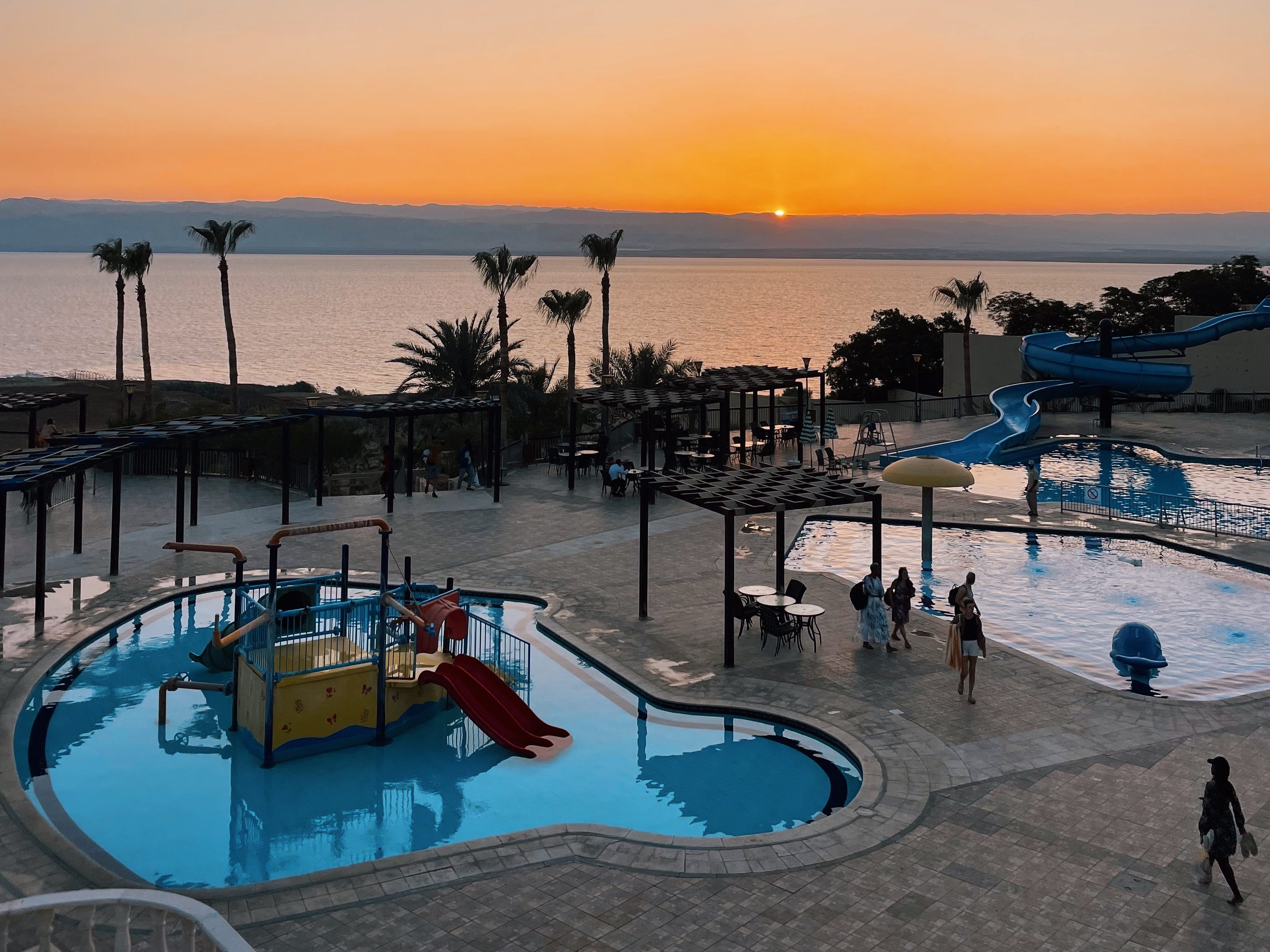
For the rest of the evening, we hung out at the hotel, had a poolside lunch, swam, and even went down the waterslide a few times. I absolutely loved the hotel which had a beautiful view of the water. It was great to relax after a busy few travel and sightseeing days. We caught the sunset over the water and enjoyed a nice dinner complete with a belly dancing show!
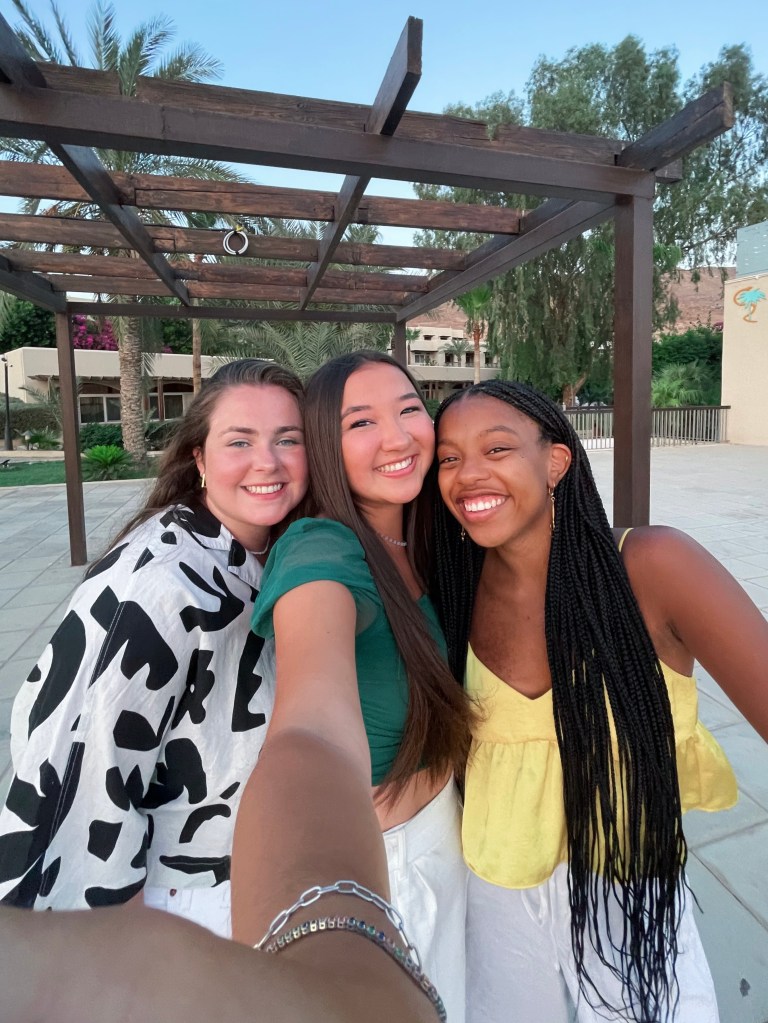
The first leg of our Jordan trip was incredible, and I loved exploring Amman and the Dead Sea. It was super interesting to observe the similarities and differences between my experience in Morocco to the environment and culture in Jordan. Everything including the food, people, history, and culture was delightful and it was even more enjoyable to experience it all with good friends. Stay tuned for part two of our Jordan trip in Petra and Wadi Rum!
 Rachel's Blog